Punta Campanella Marine Reserve: Zone A, B and C Rules for Charter Catamarans
A plain-language zone map for the Punta Campanella reserve: anchoring, swimming, transit speed and the fines crews risk on the Sorrento-Capri crossing.
Read more
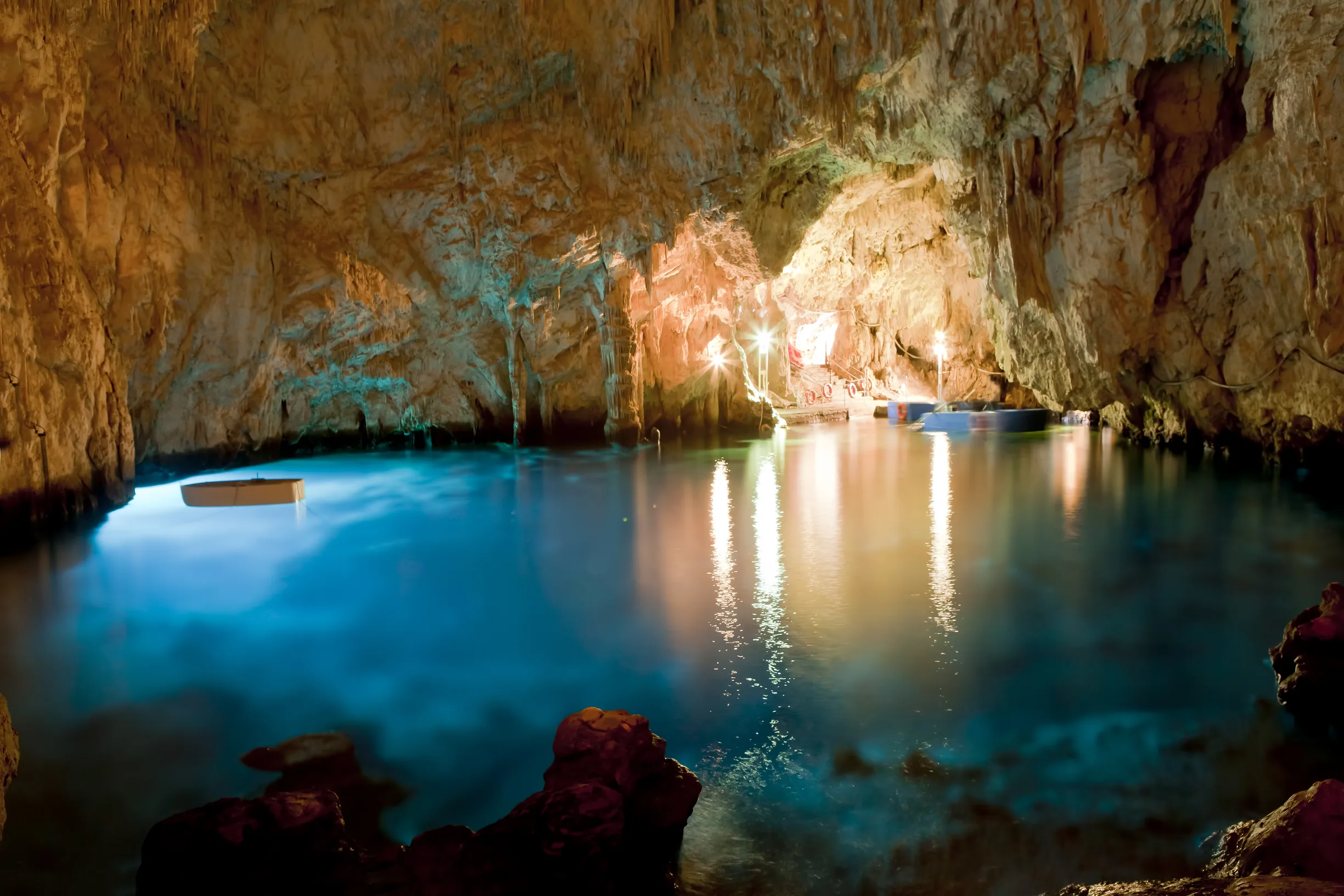
Nobody explains the Blue Grotto properly to charter guests, so here is the part that matters: you cannot take your own boat inside, and you cannot swim in during opening hours. Visiting the Blue Grotto by private boat really means holding your catamaran offshore while you transfer into a tiny rowboat that takes you through the low entrance. Once you understand that one mechanic, the whole thing makes sense.
The Grotta Azzurra, on Capri’s northwest coast, glows an electric blue because sunlight enters through a submerged opening and reflects up off the white sandy floor. It is genuinely worth doing. It is also one of the most mismanaged-feeling experiences in Italy if you arrive without a plan, so this guide walks through it the way a skipper would brief the crew.
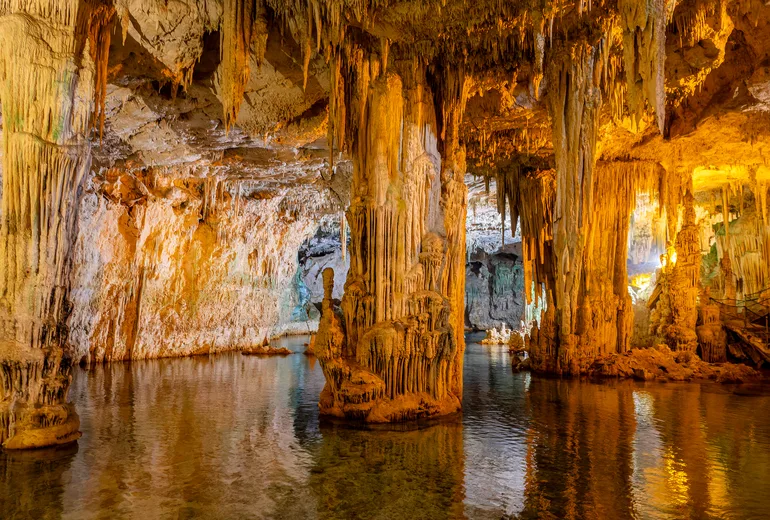
The cave mouth is barely a metre high, so only the flat wooden rowboats can pass, and only when their oarsmen lie back and time the swell. That is why your catamaran stays outside. You motor up to the area off the entrance, hold position or anchor where depth allows, and your guests step down into a small tender or the cat’s own dinghy to reach the queue of rowboats waiting at the cliff.
From there you pay, board a rowboat in pairs, duck as the oarsman pulls you through, and spend perhaps five minutes inside before the same boat brings you out. It is brief. The blue is the payoff, and on a bright, calm morning it is striking. Manage expectations on time, though: the visit itself is short, while the wait to get into a rowboat can be long.
Budget roughly €18 per person in 2026, split between the cave entry ticket and the rowboat passage. That is paid at the floating ticket point by the entrance, typically in cash, so carry euros. The fee does not include any transfer from your boat; that is on you, via your tender. Tipping the oarsman a euro or two is normal and smooths the whole transaction.
The water off the Grotta Azzurra is deep and the bottom drops away from the cliff, so settling a firm anchor is awkward for a 40-foot-plus cat. In practice most crews keep the boat under way nearby with the skipper aboard, or anchor a little further off where depth and bottom allow, then run guests in by tender. Stay clear of the line of rowboats and the small excursion boats that ferry day-trippers from Marina Grande; the area gets congested and the rowboat oarsmen have right of way at the entrance.
This is exactly the kind of stop that fits into a wider Capri morning. Pair it with the dawn timing in our companion piece on beating the Amalfi and Capri crowds by anchoring early, because the Grotto, too, is best tackled before the Marina Grande boats swamp the queue.
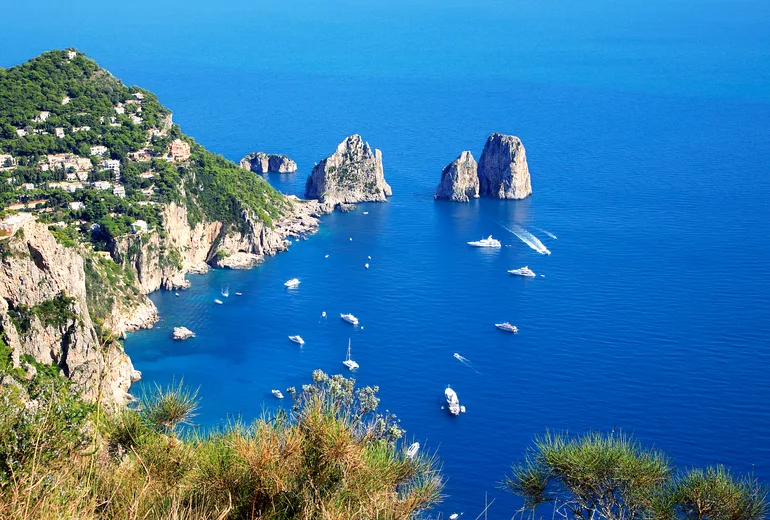
The Grotto runs on a bottleneck. Hundreds of people want into a handful of rowboats, so the wait can stretch past an hour from mid-morning. Two windows work better. The first is right at opening, typically around 9am, before the Marina Grande excursion fleet arrives; get your tender to the rowboats early and you may board within twenty minutes. The second is the last hour before the cave closes in the early afternoon, when the morning rush has cleared, though you risk an afternoon swell shutting it down.
Sea state is the deciding factor. Because the entrance is so low, even a modest northwesterly swell makes the passage unsafe and the rowboats stop running, sometimes with no notice. The cave faces northwest, so wind and swell from that quarter are the enemy. If the morning forecast shows anything more than a light breeze from the north or west, treat the visit as uncertain and have a backup plan, such as a swim stop at the Faraglioni or a run to Marina Piccola. Tides and light also matter: the blue is at its best around midday when the sun is high, but that clashes with the worst crowds, so most charter crews trade a little brilliance for a far shorter queue at opening.
During official opening hours, swimming into the Blue Grotto is banned, full stop. It is a safety measure because the rowboats are constantly passing through the narrow entrance and a swimmer in that channel is a serious hazard. Wardens enforce it, and a fine is possible. So the answer to whether you can swim in is no, not while the cave is open to visitors.
There is a well-known unofficial window after the rowboats stop for the day, often in the late afternoon, when local swimmers slip in. We mention it for context, not as advice: the swell that ends the rowboat service is frequently what made it unsafe in the first place, and there is no supervision. If your crew is set on a wild swim, there are safer, legal cave swims along this coast, including the sea caves around the Amalfi shore covered in our Naples to Capri Amalfi route.
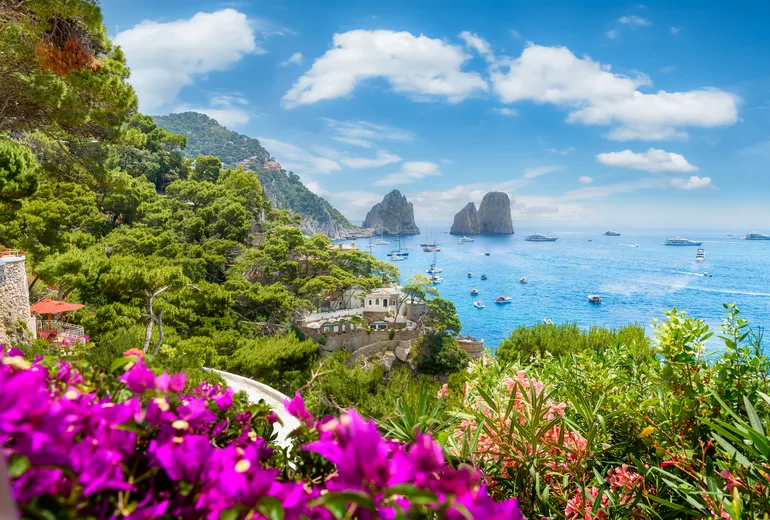
For most crews, yes, with one condition: go early and accept that the experience is more logistics than serenity. The blue itself lives up to the hype, and doing it from your own boat means you skip the long shuttle from Marina Grande that land-based visitors endure. You arrive on your schedule, tender across in minutes, and you are gone before the worst of the queue forms.
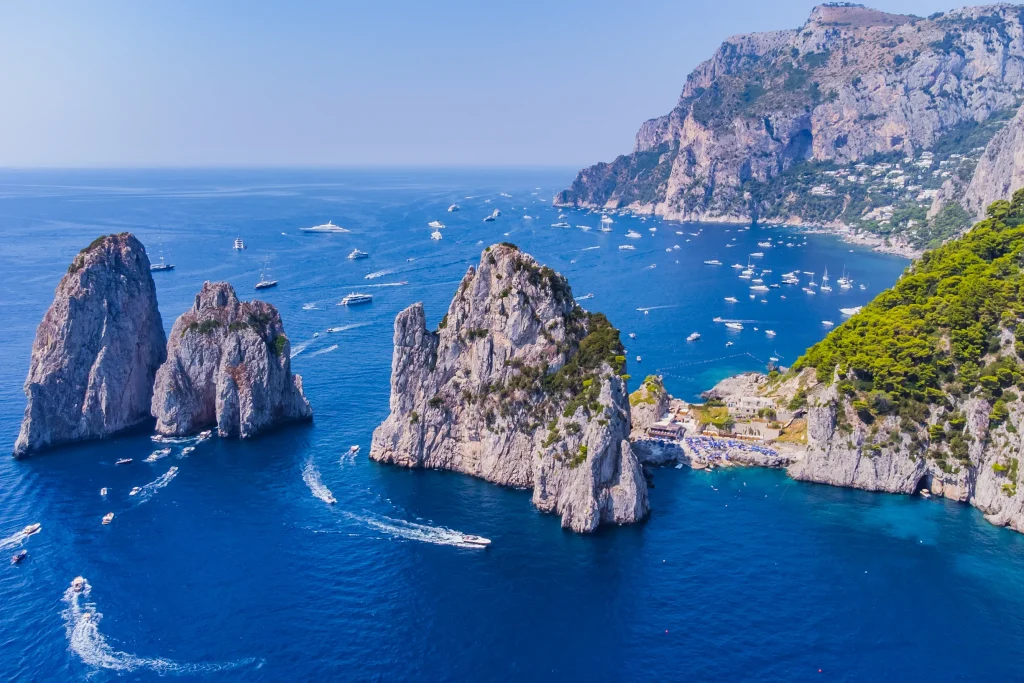
If the swell is up or the line is brutal, do not force it. Capri has plenty else: a swim through the Faraglioni arch, lunch at anchor off Marina Piccola, or the chairlift to Monte Solaro from Anacapri. Part of the freedom of a private cat is treating the Grotto as a bonus rather than a fixed appointment. For broader help shaping the trip, our team’s overview of the most popular sailing destinations in Italy puts Capri in context.
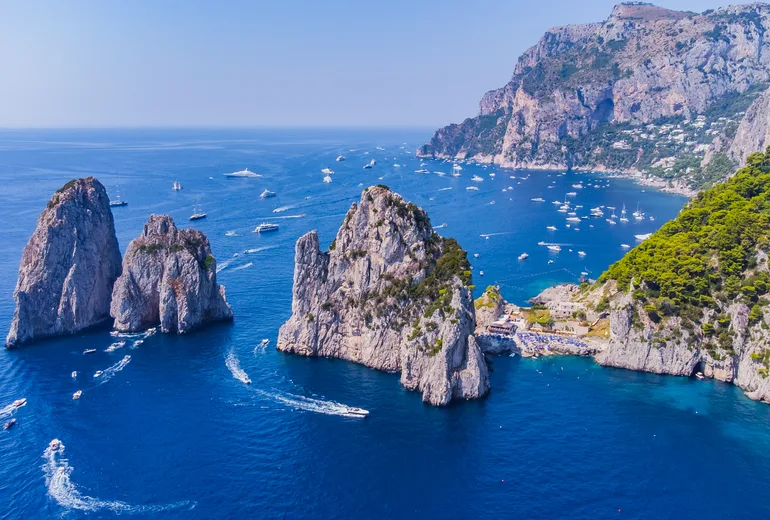
You can bring your catamaran to the area off the entrance, but you cannot take it, or your tender, inside. The cave mouth is about a metre high, so the only way in is by transferring into one of the licensed rowboats that pass through one at a time.
Plan for roughly €18 per person, combining the entry ticket and the rowboat passage, paid in cash at the floating ticket point by the entrance. That does not include your transfer from the catamaran, which you handle by tender, and a euro or two for the oarsman is customary.
Not during opening hours. Swimming in is banned for safety because rowboats are constantly using the narrow entrance, and the rule is enforced. There is an unofficial late-afternoon window after the boats stop, but it is unsupervised and often coincides with the very swell that closed the cave.
Sea state. The entrance is so low that even a modest northwesterly swell makes the rowboat passage unsafe, and service stops, sometimes without warning. If the forecast shows wind or swell from the north or west, treat the visit as uncertain and keep a backup anchorage in mind.
Right at the 9am opening, before the Marina Grande excursion boats arrive, is usually the shortest wait. Midday gives the most intense blue but the longest line. Getting your tender to the rowboats early can cut the wait to around twenty minutes.
Capri rewards a flexible plan and your own keel, which is the whole case for doing the Blue Grotto by private boat rather than from a shore shuttle. Browse catamarans and dates for the Bay of Naples on our Italy catamaran destinations page and build it into a morning on your terms.