

Three Generations, One Catamaran: Choosing the Right Layout for a Multigenerational Italy Charter in 2027
From grandparents to toddlers, the right catamaran layout makes a three-generation charter work — and the best ones book out first.
Read more
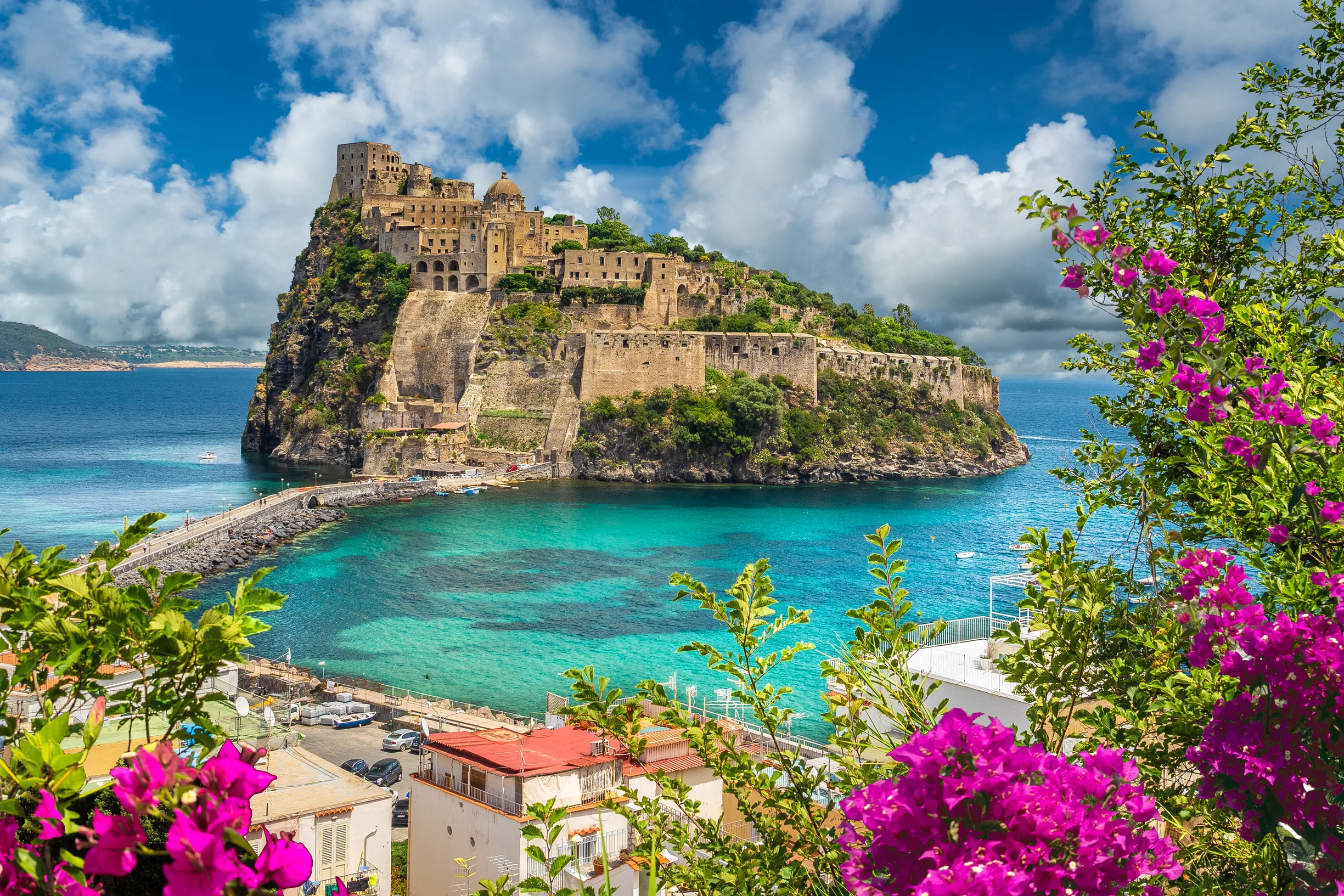
A catamaran charter Italy from the USA usually begins with an overnight flight into Rome and ends, a day or two later, with lunch on a mooring off Procida. For most American crews the Bay of Naples is the right first coast. Capri, Ischia, Procida and the Amalfi cliffs sit within a short sail of each other, and the bases at Procida, Naples and Salerno are an easy train or ferry ride from the airports.
This guide follows the trip shape we see most often from American guests: a ten-day vacation with three nights in Rome to shake off the jet lag, then seven nights aboard. It covers the flights, which base to choose, what Italian operators ask for instead of a licence, how mooring works with the ormeggiatori, real costs in dollars and the weeks worth aiming for in summer 2027.
Rome Fiumicino is the simple answer. United, Delta, American and ITA Airways typically run year-round nonstops to Rome from several US hubs, with the New York area the busiest, and the overnight eastbound flights land in the morning. Naples has had seasonal US nonstops in recent summers, mainly United from Newark. Whether that route flies in summer 2027 is worth checking before you build the trip around it, because landing in Naples cuts out the rail leg altogether.
From Fiumicino, the airport train runs into Roma Termini, and from there a high-speed service reaches Napoli Centrale in a little over an hour. Italy is six hours ahead of the East Coast in summer and nine ahead of California, which is the main reason we suggest a few nights on land before the boat.
Entry is straightforward for US passport holders. There is no visa and nothing like ESTA to fill in for Europe, and you can spend up to 90 days in any 180-day period across the Schengen area, which pools Italy with Croatia, Greece, France and Spain. Your passport should have been issued within the last ten years and stay valid at least three months beyond the day you leave Schengen; many advisers say six. Since April 2026 the EU’s Entry/Exit System records fingerprints and a facial image on your first arrival, so expect a slower line at passport control than on past trips. ETIAS, the planned online travel authorisation, is not required yet and is expected to start in 2027 at the earliest. Check the EU’s official travel-europe site before you fly.

The right base depends on which side of the Sorrento Peninsula you want to spend more time on.
The smallest and calmest of the three. Hydrofoils from Naples Molo Beverello or Pozzuoli take around 40 minutes, and the island puts you within a couple of hours of Ischia and a half-day sail of Capri. Our piece on sailing Procida and Ischia instead of chasing Capri explains why some guests end up spending most of the week here.
A city base makes sense if part of the group wants a final evening of Neapolitan pizza or a morning in the Archaeological Museum. The first leg to Procida or Capri is straightforward.
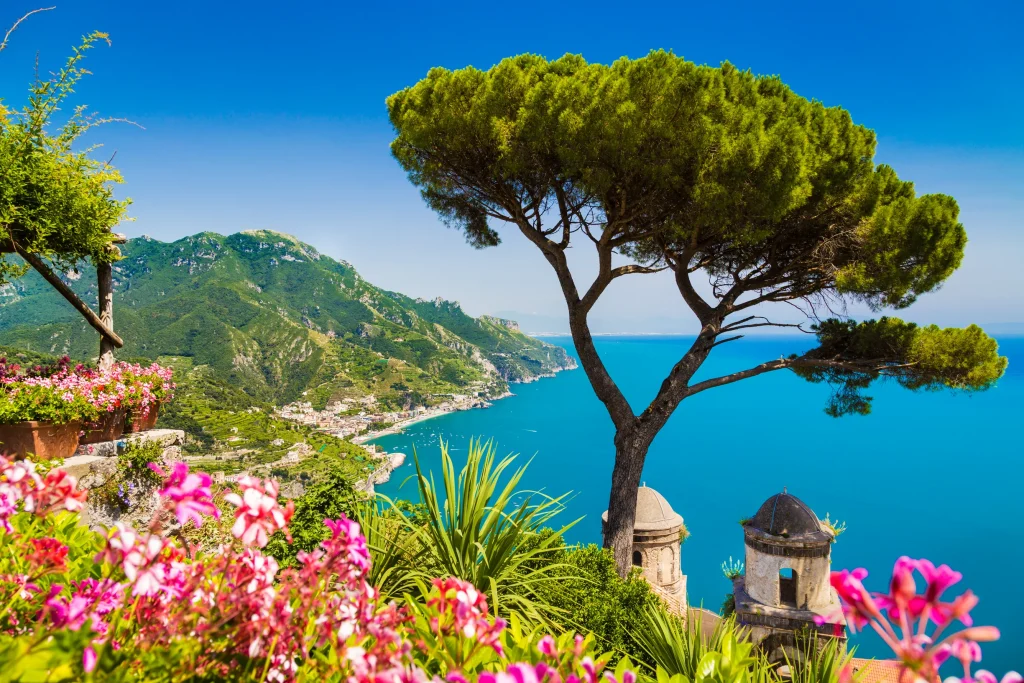
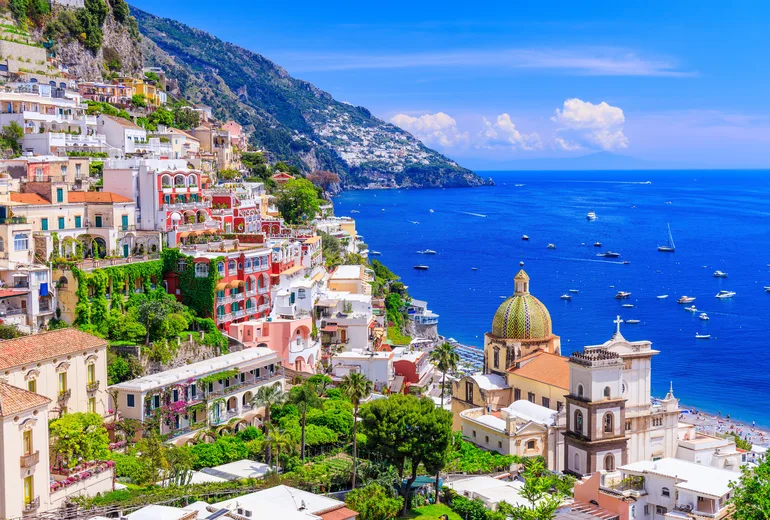
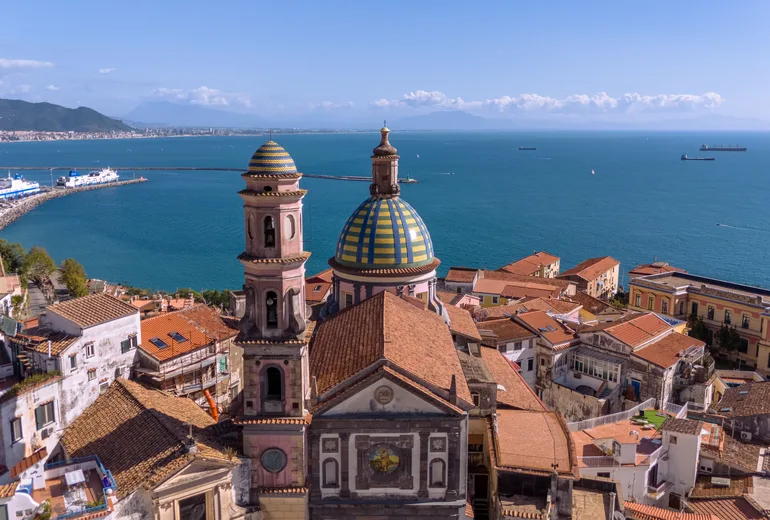
Salerno sits on the other side of the peninsula, about 35 to 40 minutes by train beyond Naples. It is the natural start for the Amalfi side: Amalfi itself is roughly 11 nautical miles away, Positano a little further, and Capri around 25 to 30. If the cliffs, Ravello and Li Galli matter more to your crew than Ischia, start here.
Charter weeks in the bay run Saturday to Saturday, with boarding from about 17:00 and checkout around 09:00. Working backwards from that, a typical American itinerary looks like this.
That last morning is the one to think about. A 09:00 checkout in Salerno leaves a tight connection for a midday transatlantic departure from Fiumicino, so most crews either fly home from Naples if a connection works or add a final night near the airport. On the water, the legs are short. Procida to Ischia is a short hop, Ischia to Capri is roughly a morning’s sail, and Capri to Positano is about ten miles, so the days are built around swimming, a long lunch and one decent sail rather than miles covered. If the Blue Grotto is on the list, read up on visiting the Blue Grotto from your own boat first; the rowboat transfer and the timing catch a lot of people out.
This is where Italy differs from Croatia, which publishes an official table of recognised American certificates. Italian law allows foreign visitors to skipper with their home-country licence where their own country requires one. Most US states do not issue anything like a sailing licence, so in practice the charter company decides who gets the keys to a bareboat catamaran, and its insurer sets the bar.
The certificates Italian operators accept most readily from Americans are ASA 104 Bareboat Cruising, US Sailing Bareboat Cruising, the ASA or US Sailing International Proficiency Certificate, and the International Certificate of Competence (ICC). Alongside any of them, expect to submit a sailing CV listing boats you have skippered, their length, the waters and roughly how many days. Charter time in the BVI or on the Chesapeake counts. A state boater-education card on its own is unlikely to be enough, and a VHF radio certificate is often requested as well.
Get the operator’s answer in writing before you pay a deposit. If the CV is thin, a skipper costs roughly €1,400 to €1,750 a week, about US$1,600 to US$2,100, plus food, and in the Bay of Naples the local knowledge often pays for itself in mooring bookings alone. Our post on sailing licence requirements for renting a catamaran in Italy covers the crewed alternatives too.
American sailors are used to slips with finger piers and a dockhand at the fuel dock. Italian harbours work differently.
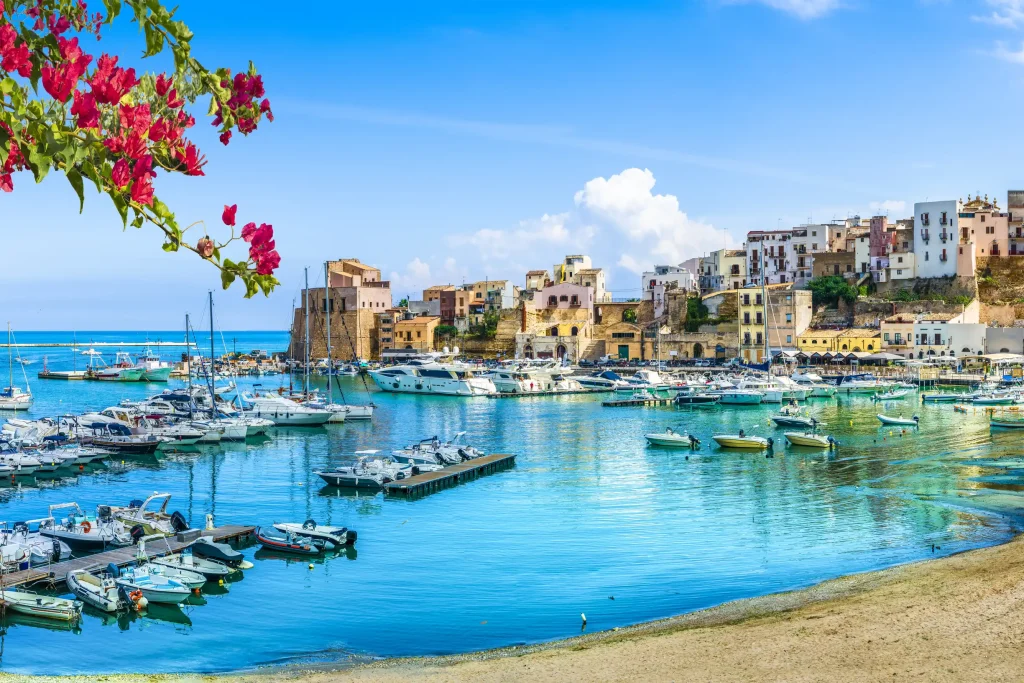
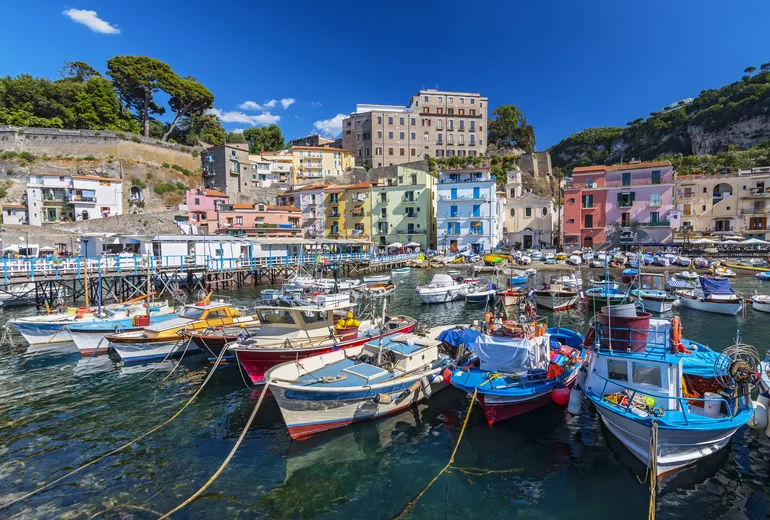
Most berths are stern-to. You reverse toward the quay, pass your stern lines ashore and pick up a lazy line, a weighted rope running from the quay to a mooring block, which you walk forward and cleat at the bow instead of dropping an anchor. In most harbours this is choreographed by the ormeggiatori, the mooring attendants who wave you into a gap from a small boat or the quay, take your lines and hand you the lazy line. A tip of a few euros is common and appreciated, and calling or booking ahead in July and August is close to essential at Capri, Positano and Amalfi.
Much of the Amalfi Coast has no marina at all, just private buoy fields run by local operators who charge per night and often include a tender service ashore. Anchoring is possible in many bays, but the water drops off fast under the cliffs, the protected Posidonia seagrass means you should look for sand, and parts of the Punta Campanella marine reserve restrict where you can drop the hook. Expect some roll: afternoon ferry wakes and swell make a few anchorages lively. This is one place where a catamaran earns its premium, because it sits flat while monohulls around it rock.
Charter prices on this site are quoted in euros and shown converted into your currency, but the euro figure is the contract price. The conversions below use roughly US$1.15 to US$1.20 per euro; rates move, so treat the dollar amounts as a guide.
Capri is the line item that surprises Americans. Mooring buoys and berths there and at Positano are priced per night and by boat length, catamarans are often charged more for their beam, and in high season a few nights around the island can push running costs well past the top of that range. Ask for the current price list before you commit to three nights at Capri; one night there and two on Procida or Ischia is often the smarter split.
Split eight ways, a June week on a 42-footer at around €5,000 works out at roughly US$720 to US$750 per person for the boat. Tipping is lighter than at home. Restaurants usually add a small cover charge, rounding up is normal, and a skipper typically gets 5 to 15 percent of the charter fee if the week went well.
The Italian season runs from May to October, with July and August the peak. Ferragosto, the 15 August holiday, is the week to think twice about: much of Italy is on vacation, the bay fills with local boats, and moorings around Capri and Amalfi are at their most expensive and hardest to find.
For an American calendar, the sweet spots are clear. Memorial Day falls on the last Monday in May and opens the season with warm days and a cool sea. The second half of June, once school is out but before the peak, is about as good as the bay gets. The weeks right after Labor Day, the first Monday in September, bring warm water, softer prices and fewer boats. A Fourth of July week is possible, but book it early. Our comparison of the best charter month for each Italian region goes deeper on sea temperatures and wind.
Some American crews also weigh Italy against Croatia for the same vacation. United’s Newark flights to Dubrovnik and Split ran nonstop in summer 2026, and if United repeats that pattern in 2027 they make a strong case. Our sister site’s Croatia catamaran guide for Americans covers that option and Croatia’s official certificate list.
Plenty of Italian-American families trace their roots to Campania, and even guests without a nonna from Naples arrive with expectations. The good news is that the real thing is easy to find from a boat. Neapolitan pizza is a short walk from most Naples berths, mozzarella di bufala from the plains near Paestum turns up in every alimentari, and Amalfi’s big sfusato lemons go into limoncello and salads.
Two dishes are worth planning a mooring around. Spaghetti alla Nerano, with fried zucchini and Provolone del Monaco, comes from Marina del Cantone on the tip of the peninsula, and several dock-and-dine restaurants there send a boat to collect you. In Naples or Sorrento, pick up sfogliatelle for breakfast on deck. Pour Falanghina with fish, or Lacryma Christi from the slopes of Vesuvius as the local red.
Do one large shop near the base on Saturday, then buy bread, fruit and fish as you go. Tap water aboard is for washing, so stock bottled water for drinking. Our guide to eating the Amalfi Coast from a catamaran lists the dock-and-dine spots worth booking.
United has flown Newark to Naples seasonally in recent summers, but check whether it runs on your 2027 dates. Rome has many year-round nonstops from US hubs, and the high-speed train covers Rome to Naples in a little over an hour.
Often yes, but in Italy the charter company decides. ASA 104 or US Sailing Bareboat Cruising plus a solid sailing CV is accepted by many operators, and an IPC or ICC makes approval easier. Confirm in writing before paying a deposit.
No visa is needed for stays of up to 90 days in any 180-day period. ETIAS is not in force yet and is expected in 2027 at the earliest, so check the EU’s official site before you travel. Expect EES fingerprints and a photo at your first Schengen entry.
A 40 to 42 ft bareboat catamaran costs roughly US$3,600 to US$9,000 a week in June or September and about US$6,900 to US$14,200 in July or August. Skipper, berths, buoys, fuel and food come on top.
It is common to hand the mooring attendant a few euros when he helps you in and passes the lazy line, especially in busy harbours. It is a courtesy rather than a fixed charge.
When your dates are set, compare catamarans at the Naples, Procida and Salerno bases and send us your week; we will tell you honestly what is still available and which operators accept your certificate.
Your privacy
You can read more about how we protect your personal data and use cookies in our Privacy Policy.
With your consent, we and Google use cookies and similar technologies to store and access information on your device and to process personal data such as your visit to this website, your IP address and cookie identifiers. You can withdraw your consent at any time through “Cookies” at the bottom of every page.
We and Google process data for:
Website analytics and visit statistics, recordings of visits to improve the website, ad measurement and remarketing, storing and accessing information on your device