Italy vs Croatia vs Greece for 2027: VAT 22% vs 13% vs 12% — and Why Italy Can Still Cost Less
Italy’s 22% VAT looks scary next to Croatia and Greece — until you add base rates, berths and the shoulder season.
Read more
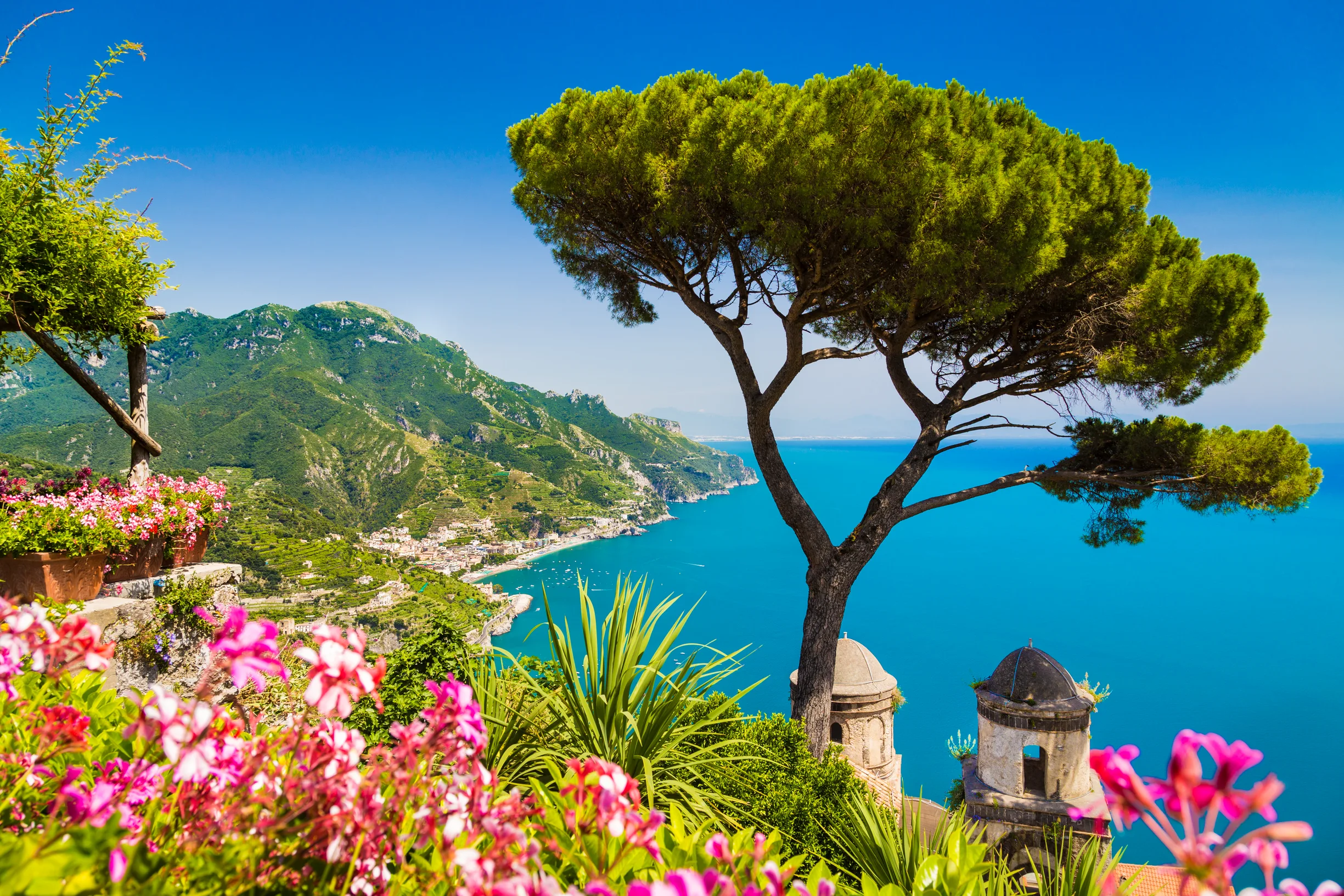
The hardest part of a catamaran charter Italy from Australia is not the sailing, it is deciding which Italy. Three very different cruising grounds sit within an hour’s flight of Rome: the Amalfi Coast and the islands of the Bay of Naples, the volcanic Aeolian Islands off Sicily, and the granite archipelago of La Maddalena in northern Sardinia. Each one changes your flights, the last leg from the airport and the kind of week you spend on the water.
This guide follows the order Australian guests usually plan in: the long haul into Italy, the train, ferry or short hop to each base, and then which coast fits your crew. After that come the details that catch people out, from licence rules and Schengen day-counting to costs in Australian dollars and what to eat aboard.
Rome Fiumicino is the main long-haul gateway, and from Australia it is a one-stop trip on carriers most travellers already know. Emirates via Dubai, Qatar Airways via Doha, Etihad via Abu Dhabi, Singapore Airlines via Singapore and Turkish Airlines via Istanbul all land at Fiumicino, with total journey times typically around 22 to 27 hours from the east coast.
Perth has a shorter option. Qantas has flown a seasonal non-stop between Perth and Rome in the northern summer, and in 2026 the route ran from early May to late October. At the time of writing Qantas had not formally announced its 2027 season, so check whether it is running for your dates before building the rest of the trip around it. Landing in Rome without a connection is a real advantage when a boat is waiting.
If your boat is near Naples or in Sicily, price a ticket straight into the south as well. Turkish Airlines connects Istanbul with Naples, Catania and Palermo, which can cut out the Rome change altogether. For Sardinia, most crews fly Rome or Milan to Olbia, a domestic hop of around an hour.
Italy’s high-speed trains do much of the work for an Amalfi Coast charter. The Leonardo Express runs from Fiumicino to Roma Termini in about 32 minutes, and from Termini the Frecciarossa reaches Napoli Centrale in roughly 70 minutes. Salerno, the base for the Amalfi side, is another 35 to 40 minutes down the line, and some services run through from Rome without a change. The marinas at Molo Manfredi and Marina d’Arechi are a short taxi from the station, so a mid-morning landing in Rome means a late-afternoon arrival on the pontoon.
For a base on Procida or in Naples itself, the ferry piers at Molo Beverello and Pozzuoli are easy to reach from Napoli Centrale, and hydrofoils get you to Procida in around 40 minutes. Sicily is a domestic flight away, a little over an hour from Rome to Catania or Palermo. Catania suits the Aeolian bases near Milazzo and Portorosa, about two hours by road, while Palermo is the closer airport for Capo d’Orlando. In Sardinia, Olbia airport sits roughly 20 minutes from Marina di Portisco and about 40 minutes from Cannigione, the two bases most crews use for La Maddalena.
Charter weeks run Saturday to Saturday, with check-in from about 17:00 and check-out around 09:00. After a day in the air, most Australian crews land on Thursday or Friday and spend a night in Salerno, Sorrento or Olbia. One hotel night absorbs a late connection, and with Italy eight hours behind Sydney, Melbourne and Brisbane in summer (six behind Perth), the first morning at sea starts rested.
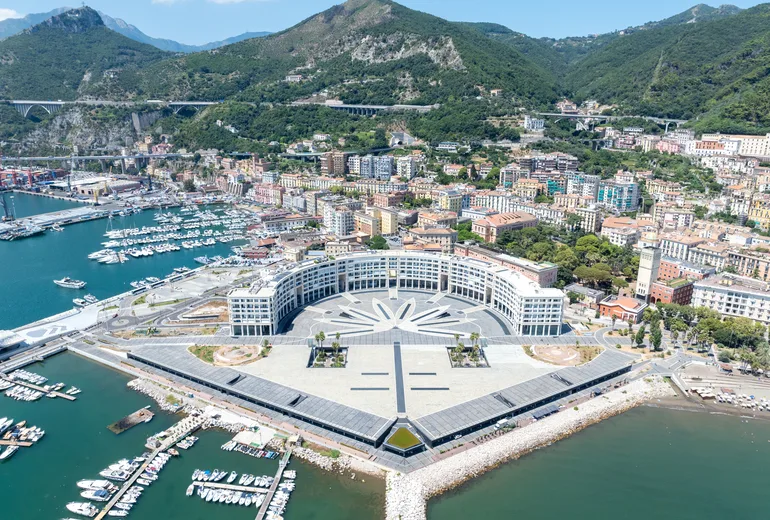
The quickest way to choose is to be honest about what the group wants from the week: towns and long lunches, proper sailing and volcanoes, or swimming in water the colour of a backyard pool. The three regions differ in all of that, and in cost.
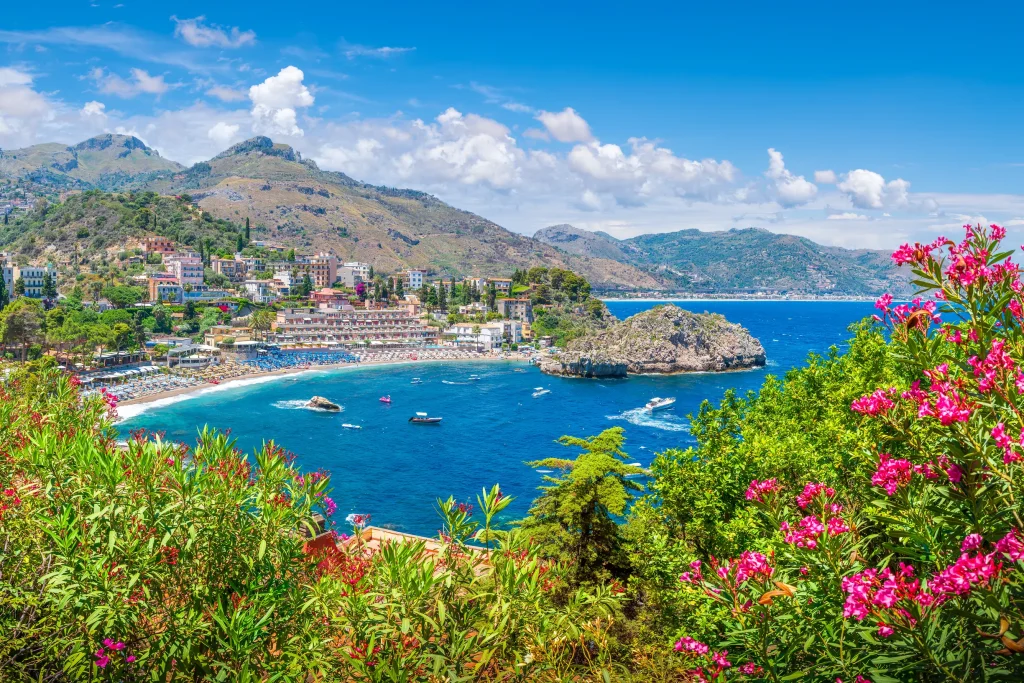
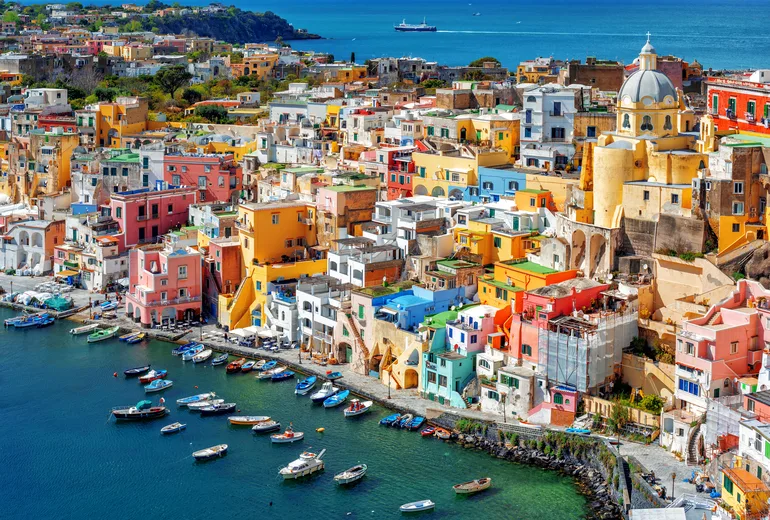
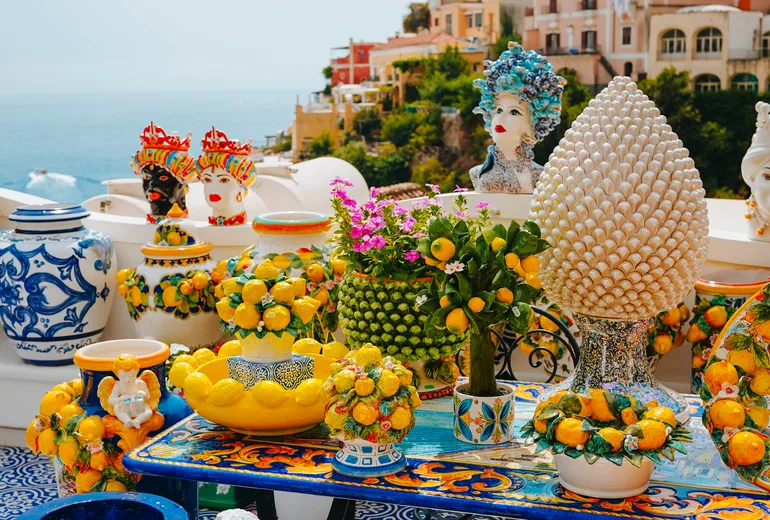
This is the Italy of postcards: Positano’s houses stacked up the gorge, Amalfi and Atrani at the foot of the cliffs, the Faraglioni stacks off Capri. From Salerno it is about 11 nautical miles to Amalfi and around 25 to 30 to Capri, so the legs are short and the days revolve around swimming and going ashore. The catch is shelter. The coast is steep, anchorages are deep and open to swell, and moorings at Capri and Positano are among the dearest in the Mediterranean. Crews balance the glamour stops with nights on Procida, by the pastel Marina Corricella, and Ischia beneath the Aragonese Castle. Our seven-day catamaran route from Naples to Capri lays out one way to do it.
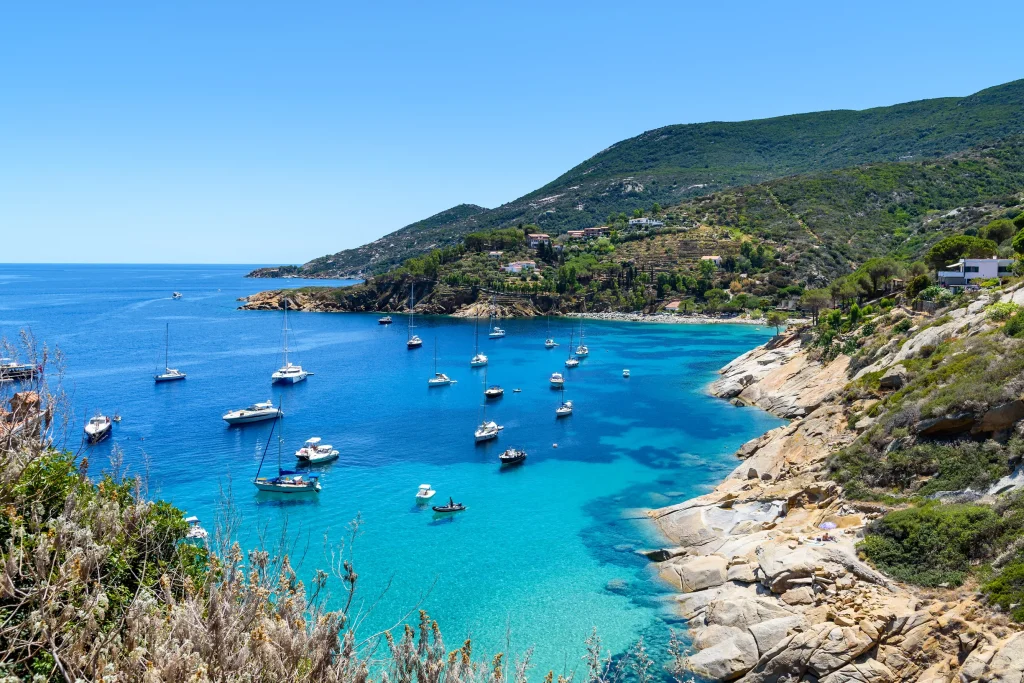
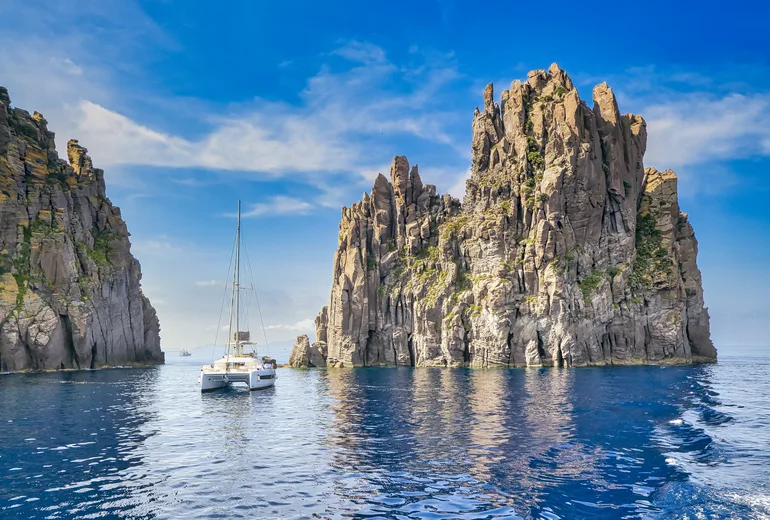
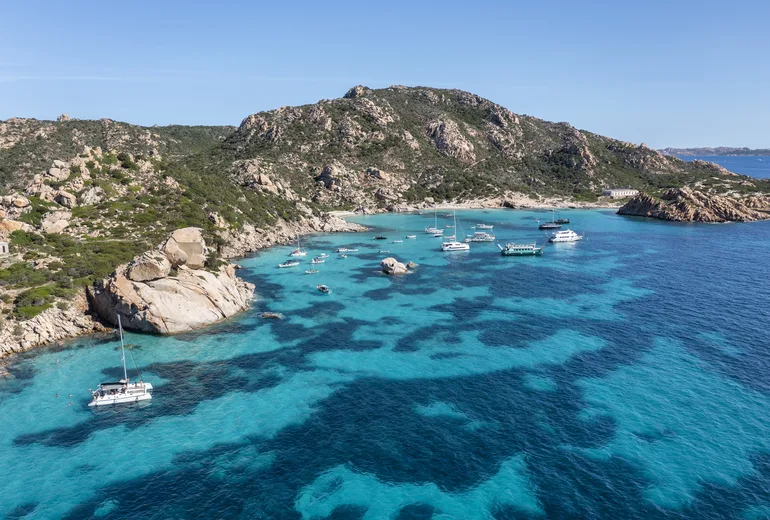
Northern Sardinia is the region Australians most often compare with the Whitsundays, and the comparison holds up: granite islands, white sand, shallow turquoise water and short hops between anchorages. La Maddalena is a national park, so mooring fields and a park permit come with the territory, and Spargi, Budelli and Caprera are a morning’s sail from Cannigione or Portisco. The wind is what to respect here. The maestrale funnels through the Strait of Bonifacio and can blow 25 knots or more for two or three days, which is why this coast rewards an experienced skipper. Our guide to exploring La Maddalena by private yacht covers the anchorages.
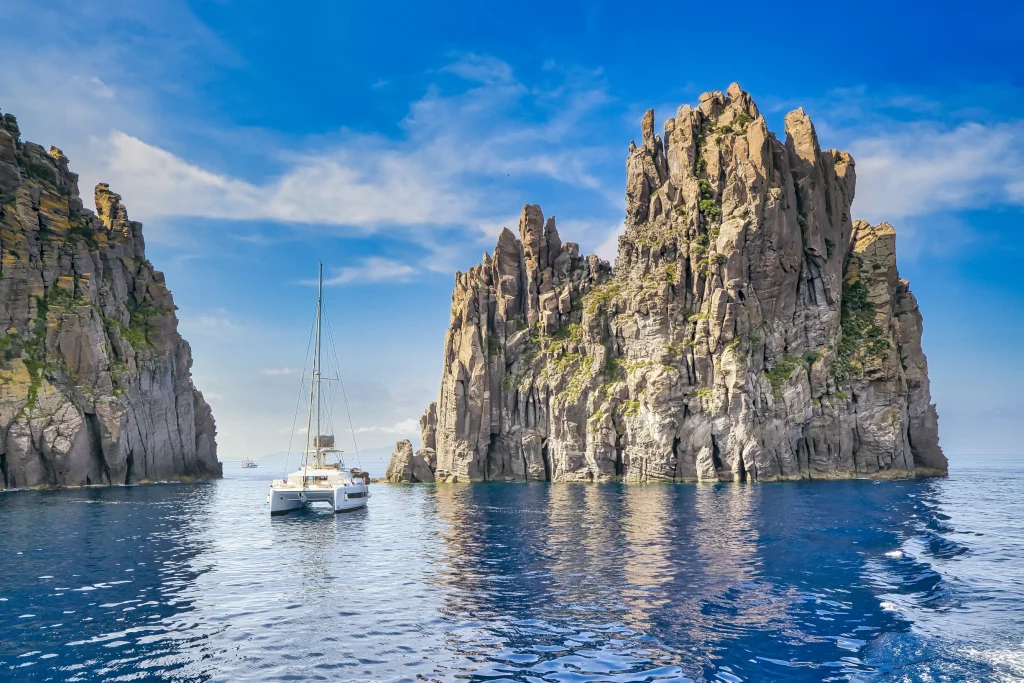
Seven volcanic islands lie off Sicily’s north coast, with Stromboli throwing up small bursts of lava on most nights and Vulcano’s sulphur mud pools a short walk from the anchorage. Lipari is the hub, Salina the green one with its caper fields and Malvasia vineyards, Panarea the fashionable one. Passages from Milazzo or Portorosa are typically 15 to 25 nautical miles, with longer runs out to Filicudi and Alicudi. It is the most sailing-heavy region of the three and usually the best value. With two weeks, the ten-day route from Naples to the Aeolian Islands shows how to link this coast with the Bay of Naples.
The Italian charter season runs from May to October, and its warm core, mid-June to mid-September, falls across the Australian winter. The July school holidays line up with Italy’s busiest weeks, when the Amalfi Coast and the Costa Smeralda are full, and August adds the Italians’ own Ferragosto holiday around the 15th. If your dates are tied to school terms, book early and budget for peak rates. If they are not, June and September are the months to aim for: sea temperatures of roughly 23 to 26°C, easier moorings and prices that typically sit 20 to 30 percent below August.
Weather differs by coast. The Bay of Naples is calmest in midsummer, with light afternoon sea breezes, while the Aeolian Islands get steadier wind and the odd strong northwesterly day. Sardinia is the windiest of the three because of the maestrale, so a June or September week there needs a day or two of slack built into the plan.
Italy’s Codice della nautica da diporto requires a boating licence to skipper a pleasure craft more than six nautical miles from the coast, or within six miles when the engines exceed set displacement limits and 30 kW, about 40 horsepower. A normal week’s crossings can take you beyond that six-mile line, and in practice charter operators ask the skipper of any bareboat catamaran for a recognised qualification.
What counts as recognised is where Italy differs from Croatia. Croatia publishes a list that names five Australian state licences; we are not aware of an equivalent Italian list naming Australian qualifications, and each operator decides what it accepts for its own fleet. The International Certificate of Competence (ICC) and the RYA Day Skipper or Yachtmaster are the tickets operators accept most readily. An Australian state licence on its own may or may not pass, depending on the operator and the region, so ask and get the answer in writing before you pay a deposit. Expect to be asked for a VHF radio certificate and a sailing CV too.
If nobody in the crew holds an ICC or RYA certificate, a skipper solves it. Italian skipper rates run about €240 to €320 per day, roughly A$385 to A$510, and a local skipper knows which Amalfi moorings to book ahead. Our post on sailing licence requirements for an Italian catamaran charter covers the basics and the crewed alternatives.
Australian passport holders can stay visa-free in the Schengen area for 90 days in any 180-day period, and that allowance covers Italy, Croatia, Greece, France, Spain and most of continental Europe as a single zone. Few Australians fly 24 hours for one week, so the limit matters more than it first appears. Rome, the charter week, Tuscany and a family visit in Calabria or Sicily can push a long summer close to 90 days.
The United Kingdom is not in Schengen, so days in London do not count, although Australians now need a UK Electronic Travel Authorisation before flying there. Albania and Montenegro also sit outside Schengen. Keep a few days in reserve for delayed flights. ETIAS, the EU’s planned online pre-travel registration, was not in force as of November 2026, so check the official EU site before you fly.
A popular two-country plan is a week in Italy followed by a week in Croatia, reached by a short flight or the overnight ferry from Ancona to Split. Our sister site’s Croatia catamaran guide for Australians covers that half of the trip, including which Australian state licences Croatia recognises.
Prices on this site are shown in euro, and the figures below are converted at 1 EUR = A$1.60, the rate on 3 November 2026. Rates move; the euro price on your contract does not. Per boat, per week:
Six guests sharing a 42-foot boat in June pay roughly A$1,100 to A$2,000 each for the hire, before flights and extras. Running costs are lower in Sicily and the smaller Sardinian towns than around Capri. The region-by-region Italian charter cost breakdown goes through marina fees, provisioning and restaurant budgets line by line.
Food is half the reason many Australians pick Italy over the rest of the Mediterranean, and a catamaran galley makes the most of it. Do one big shop near the base on day one, then buy bread, fruit and fish in the harbour towns as you go. Many bases can deliver a starter order to the boat, which helps after a long-haul flight.
Each coast sets its own table. Around Salerno and Naples it is mozzarella di bufala from the Paestum plains, Amalfi’s big sfusato lemons and a cold Falanghina or Greco di Tufo with grilled fish, with Lacryma Christi from the slopes of Vesuvius as the local red. In the Aeolian Islands, buy capers and caper berries on Salina, drink the island’s sweet Malvasia with dessert, and pick up an Etna Rosso or a Nero d’Avola in Milazzo before you sail; granita with brioche is the Sicilian breakfast. In Sardinia, stock pane carasau, the thin crisp bread that keeps for days in a galley, along with pecorino sardo and bottarga, and pour Vermentino di Gallura, the island’s only DOCG wine, with seafood or Cannonau with meat.
Wine and cheese in Italian supermarkets cost noticeably less than at home. A crew of six typically spends €1,000 to €2,500 a week, about A$1,600 to A$4,000, depending on the region and how often they eat ashore.
From Sydney, Melbourne or Brisbane plan on about 22 to 27 hours with one stop, usually in Dubai, Doha, Abu Dhabi, Singapore or Istanbul. Add one to two hours by train or domestic flight to reach a southern or island base.
Qantas has operated a seasonal non-stop between Perth and Rome in the northern summer, running from May to October in 2026. Its 2027 season had not been formally announced at the time of writing, so check the Qantas schedule for your dates.
It depends on the operator, as Italy has no Croatia-style list of recognised Australian state licences. The safest qualifications are an ICC or an RYA Day Skipper plus a VHF certificate. Confirm in writing before booking, or take a skipper.
The Bay of Naples suits crews who want towns, food and short hops, ideally with a skipper for the swell and busy moorings. The Aeolian Islands suit crews who want more sailing at better value. Sardinia’s La Maddalena is the most Whitsundays-like, but the maestrale makes it better for confident sailors.
A 40 to 42-foot bareboat catamaran costs roughly A$6,400 to A$12,000 per week in June or September, and a 45 to 47-foot boat in July or August about A$13,600 to A$20,800, at A$1.60 to the euro. Skipper, marinas, fuel and provisioning come on top.
Once you know which coast you want, compare the Italian catamaran bases in Sardinia, Sicily and the Amalfi Coast and send us your dates; we will tell you honestly which boats are still open for that week.
Your privacy
You can read more about how we protect your personal data and use cookies in our Privacy Policy.
With your consent, we and Google use cookies and similar technologies to store and access information on your device and to process personal data such as your visit to this website, your IP address and cookie identifiers. You can withdraw your consent at any time through “Cookies” at the bottom of every page.
We and Google process data for:
Website analytics and visit statistics, recordings of visits to improve the website, ad measurement and remarketing, storing and accessing information on your device