Eastern Sicily 7-Day Catamaran Route: Riposto to Syracuse Under Mount Etna
A 7-day east Sicily sailing itinerary by catamaran from Riposto to Syracuse, with Taormina, the Aci Trezza stacks and Ortigia.
Read more
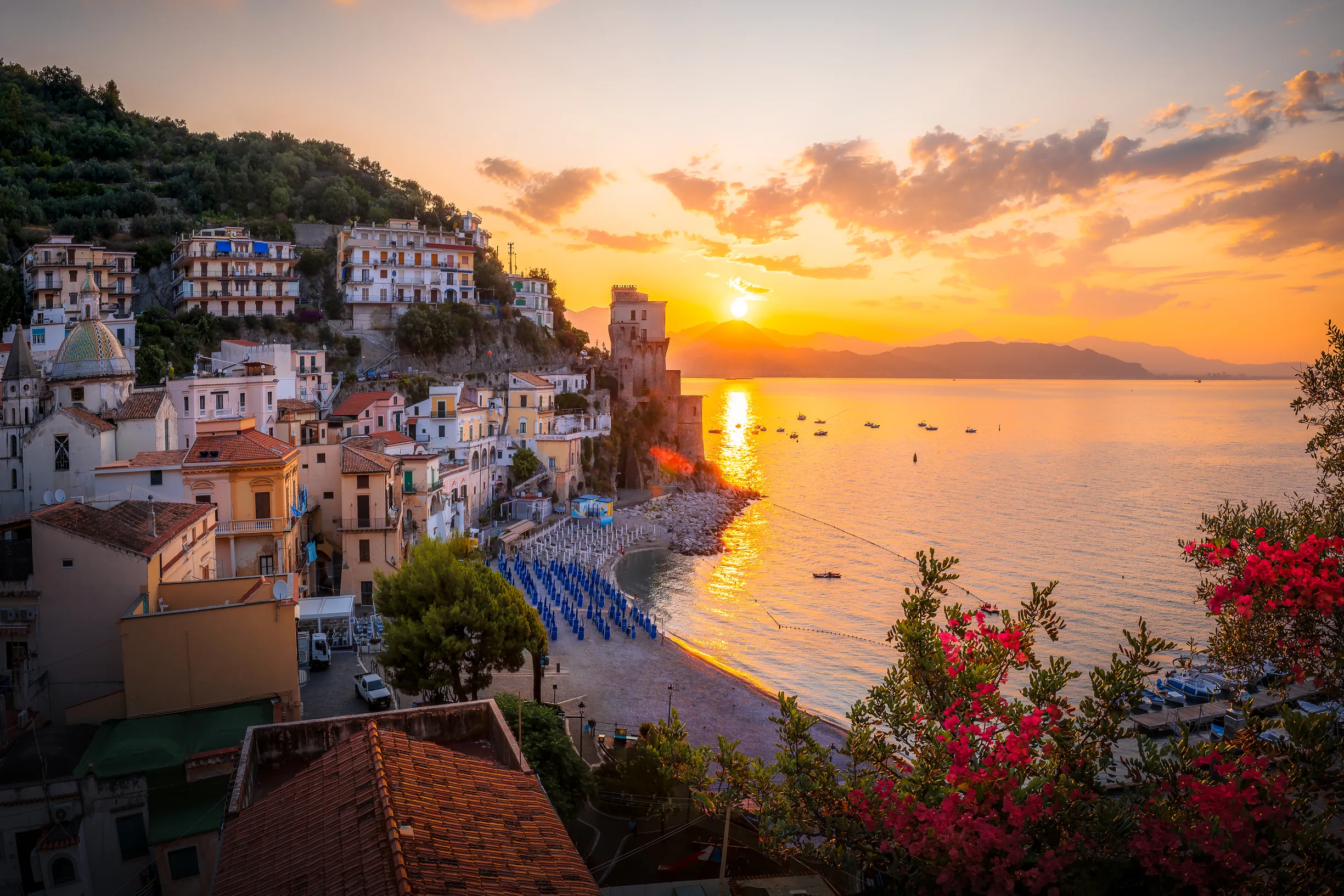
The best meals on the Amalfi Coast are not the ones you queue an hour for in Positano. They are the ones you swing onto a borrowed mooring buoy for, twenty metres off a rocky cove, where the kitchen sends a tender out to collect you. Knowing where to eat on the Amalfi Coast by boat is partly about the food and partly about logistics most land guests never think about.
A catamaran changes the whole equation. You can hold position off a restaurant that has no road access, eat lunch where the swell is calm, and be back swimming by mid-afternoon. This guide covers the dock-and-dine spots, the regional dishes worth planning a day around, and how to stock the galley so the in-between meals are just as good.
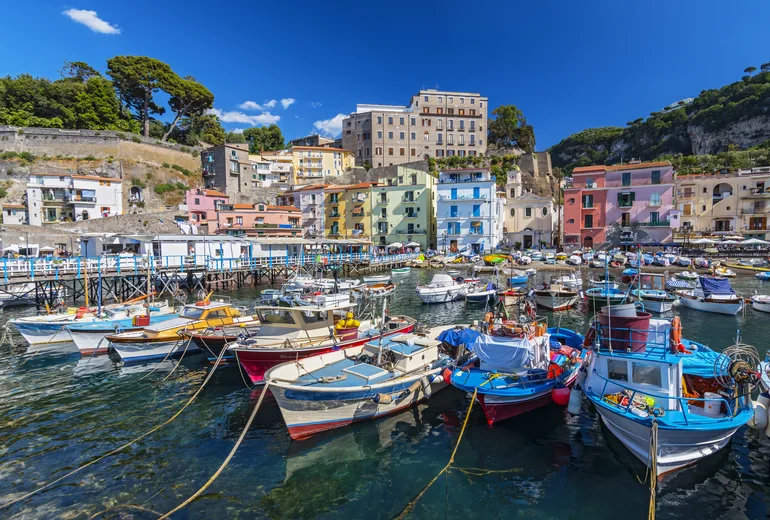
The marquee example sits in the Bay of Ieranto below Nerano, on the Sorrento Peninsula. Two long-running family restaurants here, with their own jetties and a handful of buoys, built their reputation on guests arriving by sea. From a catamaran you pick up a mooring, the kitchen sends a tender, and you are seated within ten minutes. Booking ahead in August is not optional; the buoys go to lunch reservations first.
Further east, the tiny harbour at Conca dei Marini and the cove below Praiano hide kitchens that locals reach by their own gozzo. The pattern repeats: limited road access, a short tender hop, and a menu built around what the morning boats landed. In practice, most crews find a midday slot easier than dinner here, partly because afternoon light makes the anchorage calmer and partly because the kitchens are less stretched.
Call the restaurant the day before and ask two things: whether they hold a buoy for lunch guests, and what the maximum draught and length is for the mooring. Most Amalfi buoys suit a 40-45ft cat comfortably. If they are full, anchor outside the mooring field in sand, run your tender in, and leave someone aboard. Tipping the kitchen’s boat hand a few euros for the transfer is normal and smooths the next visit.
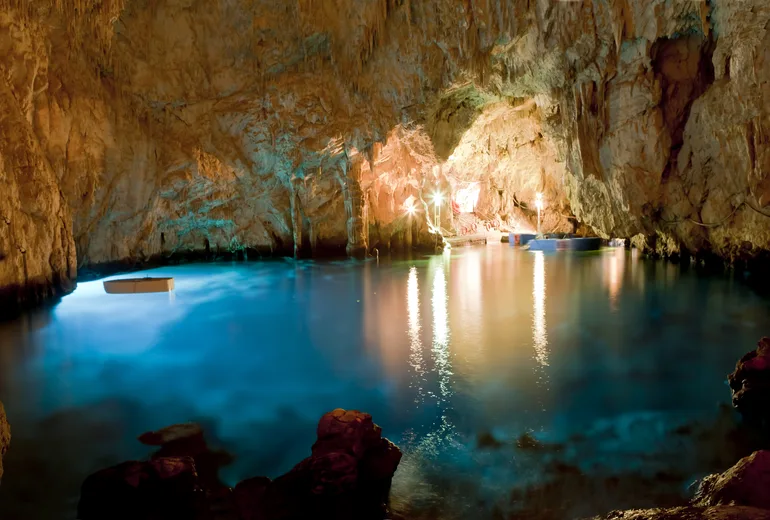
Nerano is famous for one plate: spaghetti alla Nerano, pasta tangled with fried zucchini, basil and a melt of provolone del Monaco, the local raw-milk cheese. It sounds plain and tastes like the whole peninsula on a fork. Most kitchens here guard their version, so ordering it where it was more or less invented is the point of the detour.
Around Cetara, the obsession is colatura di alici, a clear amber anchovy sauce descended from Roman garum. Order spaghetti alla colatura and you get an intensely savoury, almost briny bowl with no parmesan in sight. Cetara’s tuna and anchovy canneries still run, so you can buy jars to take back to the galley.
The sfusato amalfitano lemon, long and thick-skinned, flavours everything from the limoncello to the delizia al limone, a dome of sponge and lemon cream you will see in every pasticceria from Maiori to Minori. In Conca dei Marini, ask for sfogliatella Santa Rosa, the shell-shaped pastry said to have been created in a clifftop convent above the bay. A box of these survives a morning in a cool locker and turns an anchorage breakfast into something memorable.
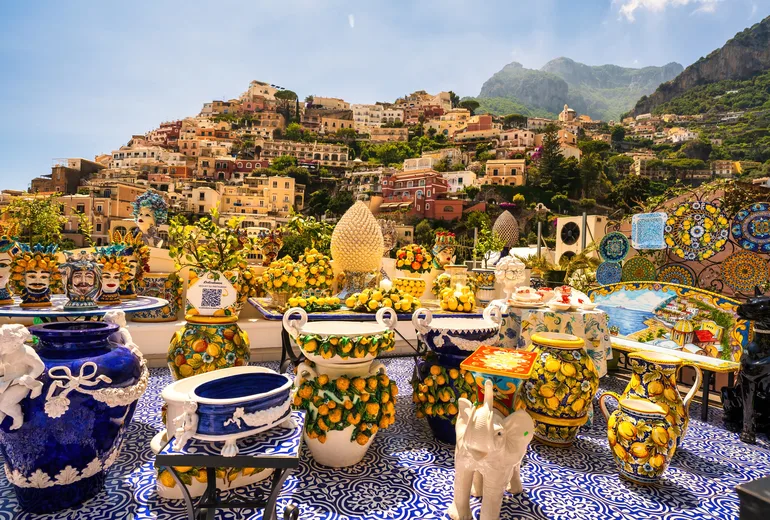
Marinas are scarce and pricey on this stretch, so most charter crews mix mooring buoys, anchoring and the occasional alongside berth. Marina di Stabia near Castellammare and the Salerno marinas are the practical overnight bases at either end; the villages between are day-stops. The classic seven-day loop from Naples out to Capri and back threads most of these together, and our day-by-day on the Naples to Capri 7-day catamaran route shows how the food stops slot into a real sailing schedule.
In Amalfi town itself, tie up briefly at the public quay or anchor off and tender in for an early lunch before the ferry crowds peak around noon. In Cetara, the small harbour suits a lunch stop to eat anchovies at the source. In Marina del Cantone below Nerano, plan the whole midday around the zucchini pasta and a swim in clear water afterwards. For a wider shortlist beyond this coast, our guide to the best nautical restaurants in Italy covers spots from Sardinia to Sicily.
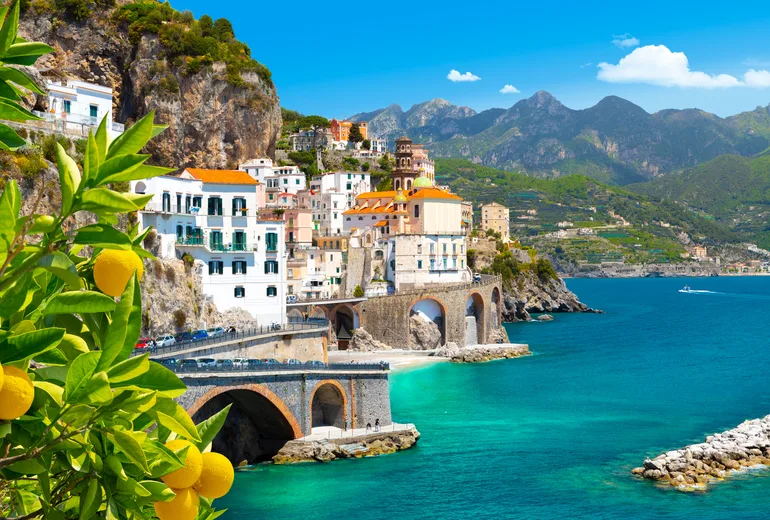
Eating out every meal on the Amalfi Coast gets expensive fast, with a sit-down lunch for four running roughly €120-220 before wine. The smart play is to provision well and eat aboard at anchor on alternate days. Naples and Salerno have the only real supermarkets; the coastal villages are boutique grocers and fruit stands at boutique prices.
Stock up at the start: buy mozzarella di bufala campana the morning you provision and eat it within a day or two, because the good stuff is never refrigerated hard and does not keep. Add sfusato lemons by the bag, San Marzano tomatoes, a wheel of provolone del Monaco if you can find it, and dried Gragnano pasta, which is made just inland and cooks beautifully in seawater-salted water.
Skip the tourist-priced bottles in Positano. From Naples or Salerno, load a few bottles of Falanghina and Greco di Tufo for white, and a Lacryma Christi del Vesuvio, red or white, grown on volcanic slopes you can see from the anchorage. A case bought ashore costs a fraction of buoy-side restaurant prices and turns a sundowner in a quiet cove into the meal you remember. For the full breakdown of costs and quantities, our companion piece on Italian catamaran provisioning by region runs the numbers.
August lunch service on the Amalfi Coast is a scrum. The trick a catamaran gives you is timing. Arrive at a buoy-side restaurant for a 12:30 sitting and you are seated before the charter day-boats from Positano and Capri disgorge their guests around 1:30. Eat early, swim while everyone else eats, and you have the cove half to yourself by 3pm.
The same logic applies to anchorages near the famous towns. Holding off Positano or under the Faraglioni at Capri is calmest first thing and again at dusk. If beating the August crush is your main worry, the dawn-departure tactics in our anchor-before-9am Amalfi and Capri playbook pair naturally with a food-led itinerary.
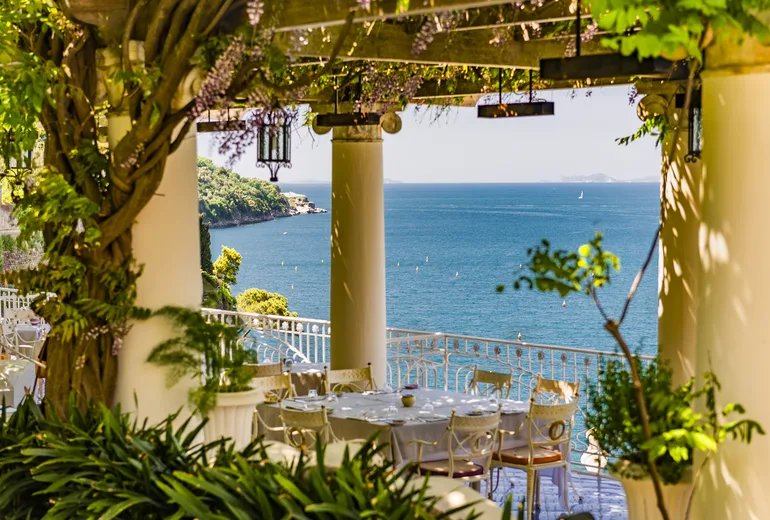
At several, yes. Restaurants in the Bay of Ieranto below Nerano and a few coves near Conca dei Marini and Praiano maintain their own mooring buoys for lunch and dinner guests, and send a tender to collect you. Call a day ahead to reserve a buoy, as they are tied to table bookings and fill quickly in summer.
Spaghetti alla Nerano, the fried-zucchini and provolone pasta from the village of Nerano on the Sorrento Peninsula, is the dish most worth routing a day around. Close runners-up are spaghetti with Cetara’s colatura di alici and anything featuring the local sfusato lemon for dessert.
Cooking aboard is far cheaper, often by half or more. A restaurant lunch for four typically runs €120-220 before wine, while a provisioned galley meal costs a fraction of that. Most crews alternate, eating out for the signature dishes and cooking at anchor the rest of the time.
Naples and Salerno at either end of the coast have the only full supermarkets and the best wine prices, so stock up there. The villages between are good for fresh mozzarella, lemons and bread but charge boutique prices and have limited stock.
Ready to plan a food-led week along this coast? Browse available boats and routes on our Italy catamaran charter destinations page and start matching anchorages to lunch reservations.