Honeymoon Afloat: Amalfi Coast or Aeolian Islands for Your 2027 Sailing Honeymoon?
Amalfi glamour or Aeolian volcanic drama? A honest comparison of the two best regions for an Italy sailing honeymoon by catamaran.
Read more
If you are planning a charter around northern Sardinia this summer, the rules for the Arcipelago di La Maddalena have just changed in your favour. Regulation 33/2026 came into force on 2 June, and for the first time it lets sailing vessels stay overnight at anchor in many park zones again, moves the whole permit system online, and gives a real discount to boats that arrive under sail. This is the practical breakdown for a la maddalena permit 2026, written for people who will actually be on the water.
The short version: a catamaran is one of the best-placed boats in the fleet to benefit. You get a stable platform for a calm night on the hook, the shallow draft to tuck into the granite coves, and you qualify for the reduced rate that applies to sail-powered vessels. Below is how the new system works, what it costs, and where you can and cannot drop the anchor.
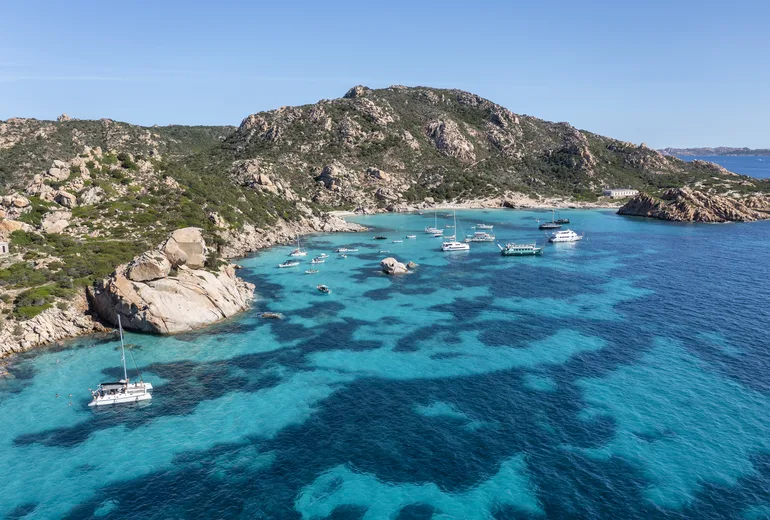
The headline is the repeal of the blanket overnight ban. Until last season, almost every boat had to clear the park’s inner zones by sunset, which pushed crews back to crowded moorings at Cala Gavetta or out to Palau every evening. From 2 June, overnight stays at anchor are allowed again in the zones that permit anchoring during the day, with sand-and-mud bottoms only and a cap on how many boats can sit in the busiest coves.
Two other things matter for charter guests. First, the permit is now bought online before you arrive, rather than queued for at the park office. Second, the fee structure has been re-tiered by length and propulsion, and sail-powered boats including cruising catamarans get a 40% reduction on the standard motor-vessel rate. That discount is not a gimmick. Over a week it adds up to real money, and it nudges the whole archipelago toward quieter, lower-impact visits.
Every boat entering the park’s marine zones needs daily authorisation, whether you anchor, pick up a mooring buoy, or simply transit slowly through a protected stretch. The only craft generally exempt are those under oar or small tenders attached to a permitted mother ship. If you are on a bareboat or skippered cat, assume you pay, and budget for it from day one.
The park runs a single official portal where you register the vessel, select your dates, and pay by card. You will need the boat name, length overall, the registration details from the charter papers, and the propulsion type so the system applies the sailing rate. Print or screenshot the confirmation, because the maritime police and park wardens do check, and a fine for an unpermitted overnight stay runs well into three figures.
A few logistics worth knowing. Permits can usually be bought a day or two ahead, which is ideal because Sardinian weather shifts and you do not want to lock in a zone you then cannot reach. If your skipper is handling it, confirm they have entered the boat as a sailing vessel, not a motoryacht; charter offices occasionally default to the higher tier. For the wider mechanics of booking and what your charter fee already covers, our broker team breaks it down in the guide to what is included in a catamaran rental fee.
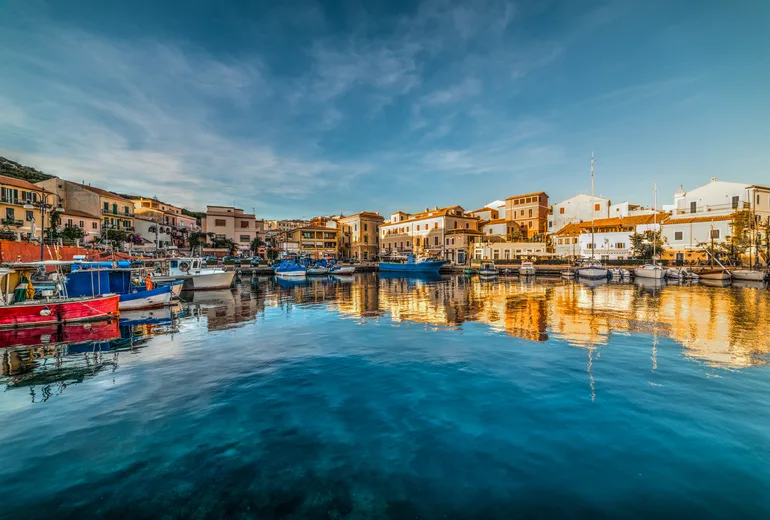
Fees scale with length, so a 40 to 46-foot cruising cat sits in the mid band. As a rough planning figure, expect the discounted sailing rate to land somewhere around €25–55 per day for a boat in that range, against the higher motor-vessel tier. Over a seven-day cruise where you spend four or five nights inside the park, the 40% sailing reduction typically saves the kind of sum that covers a dinner ashore in La Maddalena town. Treat these as ballpark numbers and check the live tariff when you book, because the park adjusts bands season to season.
The archipelago is split into protection zones, colour-coded from the strict no-go reserves to general-use waters. The practical rule for crews is simple: the more famous and fragile the seabed, the tighter the rules. The pink-sand beach on Budelli, Spiaggia Rosa, remains completely off-limits to landing and close approach, and the surrounding Zone A is no-anchor, no-stop. Plan to admire it from a respectful distance and move on.
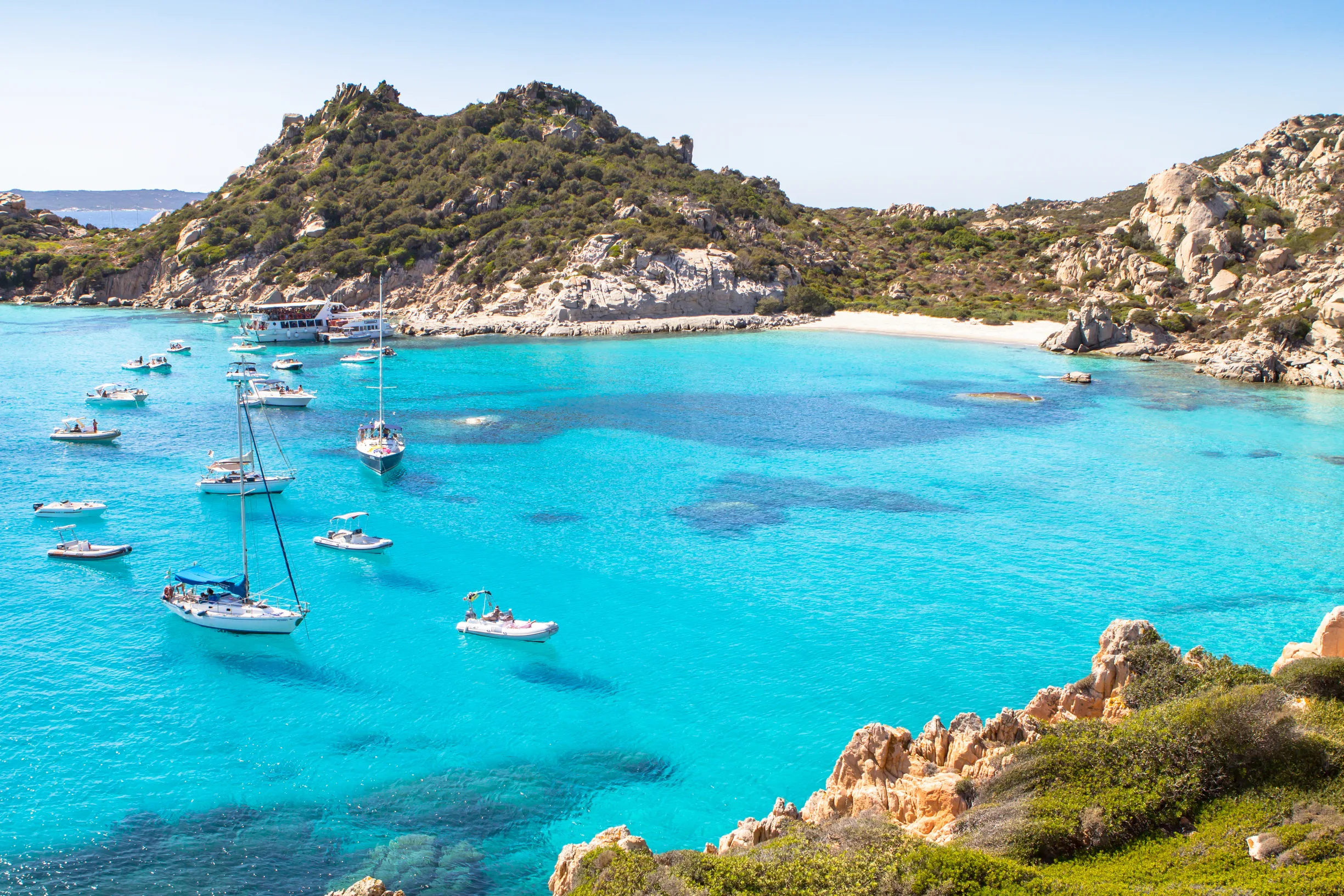
Where the new overnight permission really helps is the granite coves of Spargi and Caprera. Cala Corsara on Spargi, with its sculpted boulders and shallow turquoise shelf, is a classic lunch stop that you can now hold into the evening when the day-tripper fleet thins out. On Caprera, Cala Coticcio, often nicknamed the local Tahiti, and Cala Brigantina give good holding in sand once the crowds leave. Always check the cove’s posted boat cap before settling in for the night.

The single most important habit in this park is anchoring only on clean sand. The seagrass meadows of Posidonia oceanica are protected, and dropping into them is both an offence and a fast way to drag at 2am. From a catamaran’s bows you can usually read the bottom clearly in this water: pale, rippled patches are sand; dark, mottled patches are weed. Aim for the pale, lay plenty of chain for the shallow depths, and back down gently to set. If your guests want the full archipelago picture before the trip, our long-read on a private charter exploring the La Maddalena archipelago walks through cove by cove.
The overnight change rewards boats that are comfortable to sleep on at anchor, and that is exactly where a cruising cat earns its keep. Two hulls mean far less roll than a monohull when a light northerly swell wraps into a cove overnight, so the crew actually rests. The shallow draft, often little more than a metre, lets you sit closer in than the deep-keeled yachts, which matters when the prime sand patches are taken. And because you arrive under sail in the lee of the islands, you bank the 40% discount the regulation was designed to encourage.
There is a comfort angle too. With the day boats gone by 7pm, a cove like Cala Corsara turns silent, and a flat deck with a glass of Vermentino as the granite glows pink is the kind of evening this park used to forbid. If you are still weighing hull types for Sardinia, the trade-offs are laid out plainly in our piece on whether catamarans are cheaper than yachts.
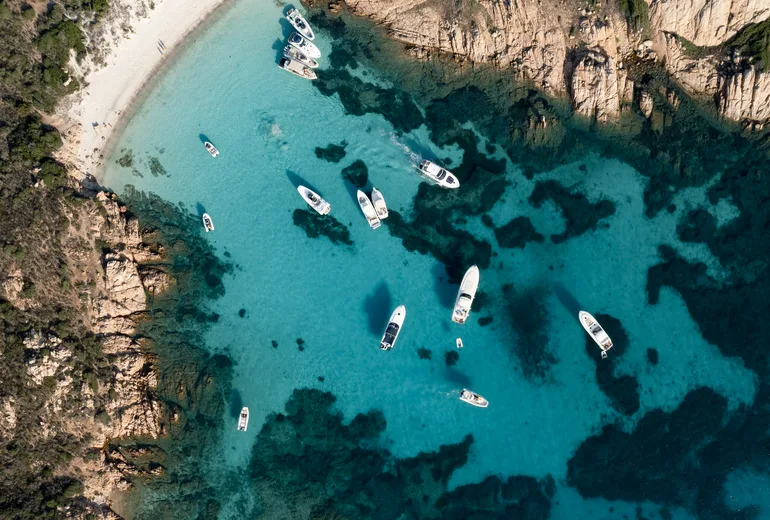
Here is how a crew might fold the new overnight rule into a northern Sardinia week. Start from Palau or Portisco, clear the short hop to the park, and buy the permit the evening before. Day one, lunch at Cala Corsara on Spargi, swim, then hold the cove for the night once the fleet leaves; it is roughly 6–8 NM from Palau, under two hours of easy sailing. Day two, cross to Caprera for Cala Coticcio in the morning light, then drift up toward Budelli’s Porto Madonna pool to anchor on sand off Spiaggia del Cavaliere, keeping well clear of the protected pink beach.
By the third morning you can run back to La Maddalena town for provisions and an espresso on the harbourfront, or push west toward Santa Teresa Gallura if the forecast is kind. For a fuller route that strings the archipelago into a proper itinerary, see our rundown of Sardinia’s must-see bays, islands and towns by catamaran.
A handful of things will keep your trip clean. Carry the permit confirmation where you can show it on a phone. Anchor only on sand, never in seagrass, and respect the per-cove boat limits, which wardens enforce more strictly now that overnight stays are back. Hold your speed down inside the zones; there are slow-speed limits to protect swimmers and the seabed. And watch the wind: these coves are sheltered from most directions but a strong mistral from the northwest can make the western anchorages untenable, so keep an alternative in your back pocket.
Yes. Any boat entering the park’s marine zones, including charter catamarans whether bareboat or skippered, needs a daily online permit. The exemptions are narrow, mostly oared craft and tenders, so plan to pay for every day you spend inside the park.
For the first time in several seasons, yes, in the zones that allow daytime anchoring and only on sand or mud bottoms. Each cove has a cap on the number of boats, and the strict Zone A reserves such as Spiaggia Rosa on Budelli remain off-limits day and night.
Sail-powered vessels, including cruising catamarans, receive a 40% reduction on the standard motor-vessel tariff. For a 40 to 46-foot cat spending four or five nights inside the park, that typically saves enough over a week to cover a meal ashore. Check the live tariff when you buy, as bands change by season.
Through the park’s official online portal, before you arrive. You register the boat with its length and registration from the charter papers, choose your dates, pay by card, and keep the confirmation on your phone. Make sure the boat is entered as a sailing vessel so the discounted rate applies.
Cala Corsara on Spargi and Cala Coticcio and Cala Brigantina on Caprera are reliable favourites with good sand holding once the day fleet leaves. The Porto Madonna pool between Budelli, Razzoli and Santa Maria is another sheltered option, anchored on sand and clear of the protected pink beach.
Ready to put the new rules to use? Browse available boats and dates on our Italy catamaran destinations page and lock in a northern Sardinia week while the prime park slots are open.