Honeymoon Afloat: Amalfi Coast or Aeolian Islands for Your 2027 Sailing Honeymoon?
Amalfi glamour or Aeolian volcanic drama? A honest comparison of the two best regions for an Italy sailing honeymoon by catamaran.
Read more
Updated June 2026.
The Naples Aeolian Islands catamaran route is the dramatic Italian charter — 10 days from the Bay of Naples south to the volcanic archipelago off Sicily’s north coast, then back. Active volcanoes, black-sand beaches, hot-spring islands, and a Roman-era trading route running the whole way. This is for experienced charterers who want longer passages and more open-water sailing than the standard 7-day Amalfi loop.
The Naples-Aeolian route involves a 60-90 nm open-water crossing from Salerno/Cetraro south to Lipari. Not technically difficult but requires settled-weather planning and a comfortable skipper. The Aeolians themselves are short-leg, similar to the Cyclades in density — seven islands within 25 nm of each other. The combination of Amalfi opening + Aeolian core + return makes for a 10-12 day full charter.
Best for: experienced skippers (or skipper-led charters), ages 12+, couples and small groups with sailing background. Less suited to first-time charterers or families with young kids.
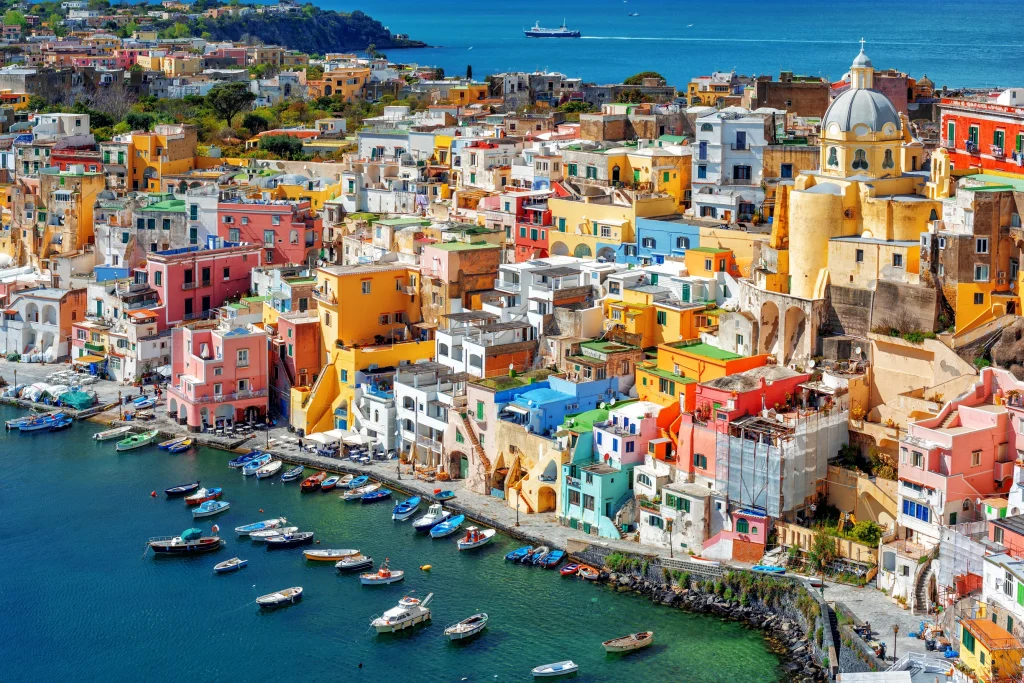
Standard opening. Boat check-in, briefing, provisioning. Sail to Procida. Marina Corricella for dinner.
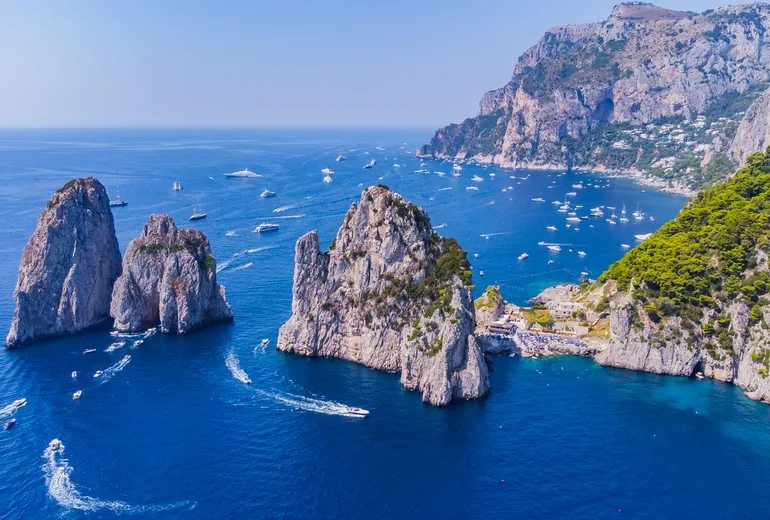
The Capri day. Marina Grande, Faraglioni rocks photo stop, evening Piazzetta.
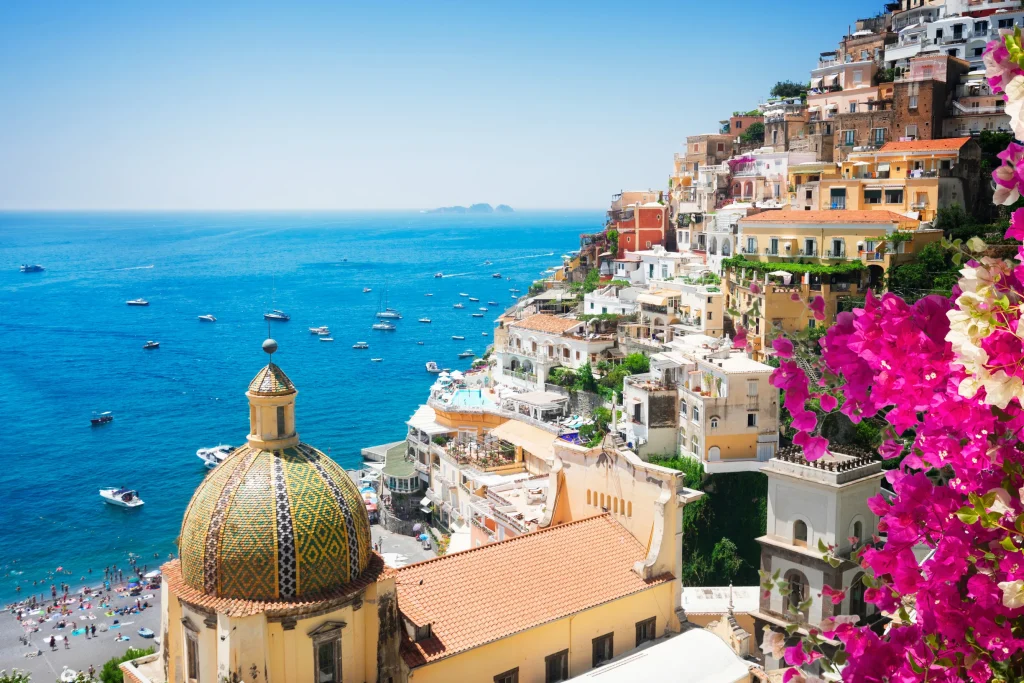
Combine two stops in a single day. Lunch at Positano on the mooring buoy, continue east to Amalfi for the overnight. Anchor outside or marina at Amalfi.
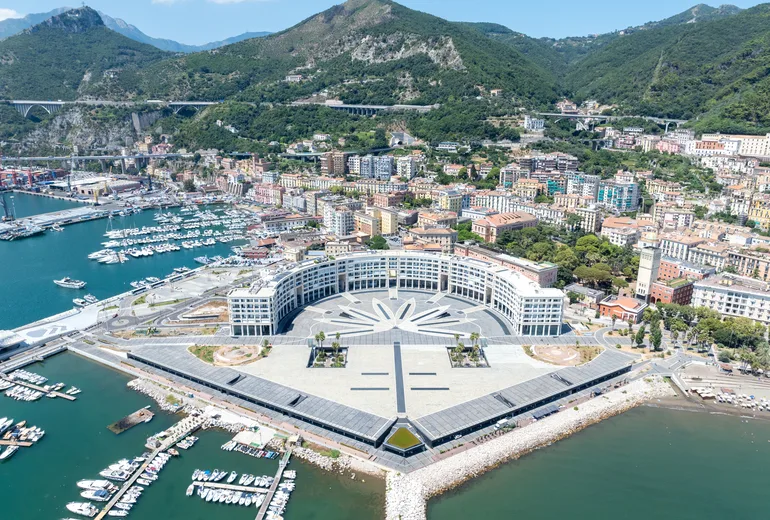
Short hop to Marina d’Arechi at Salerno. The refuge port and the last northern stop before the open-water crossing south. Provision restock at Salerno’s Conad, fuel top-up at the marina.
The first long-passage day. Sail south along the Calabrian coast to Cetraro or San Lucido. Long day — depart by 06:00 to arrive by 18:00. Cetraro Marina is small but full-service.
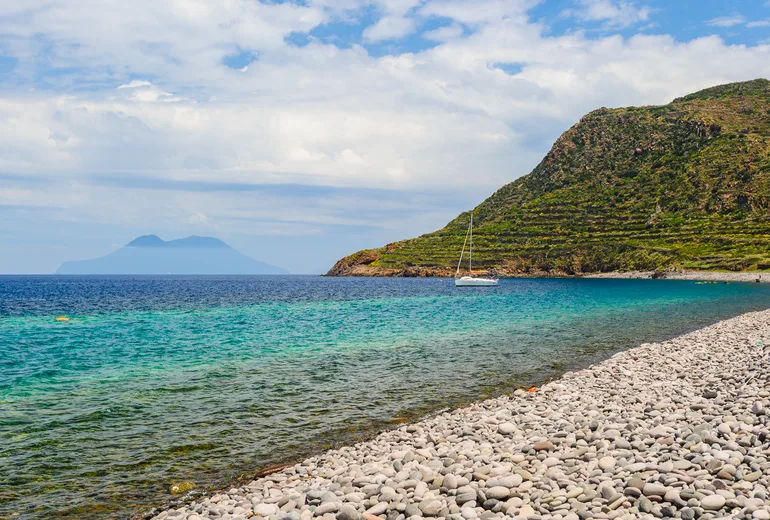
The crossing day. Cross from the mainland to the Aeolian archipelago. Vulcano is the southernmost, with the famous hot-spring mud bath. Mooring field at Porto di Levante. Sulfur smell is real.
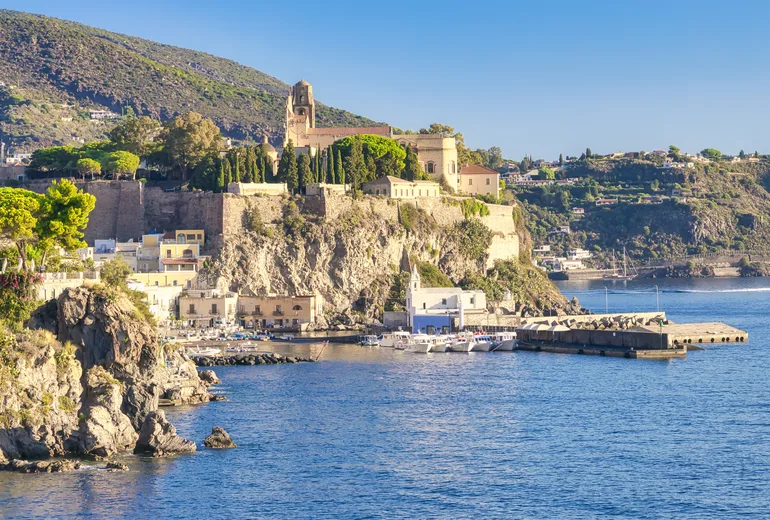
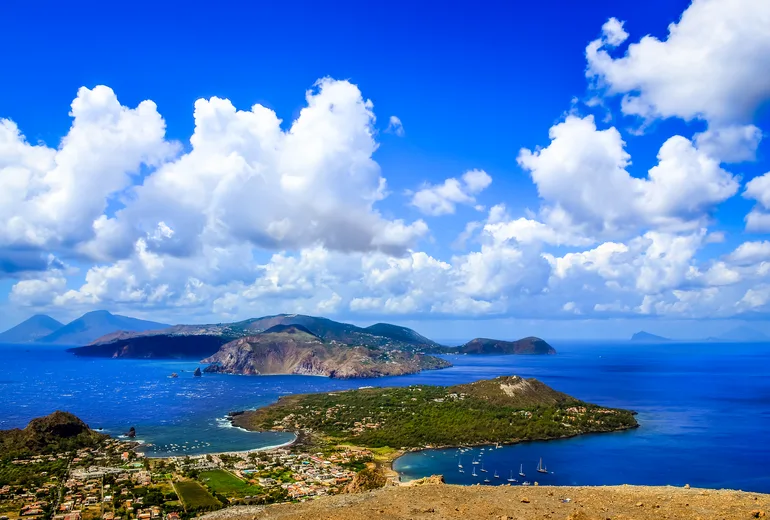
Short hop north to Lipari, the largest Aeolian. Marina Lunga is the main marina; town quay also workable. Walk the old town, dinner at one of the harbour restaurants.
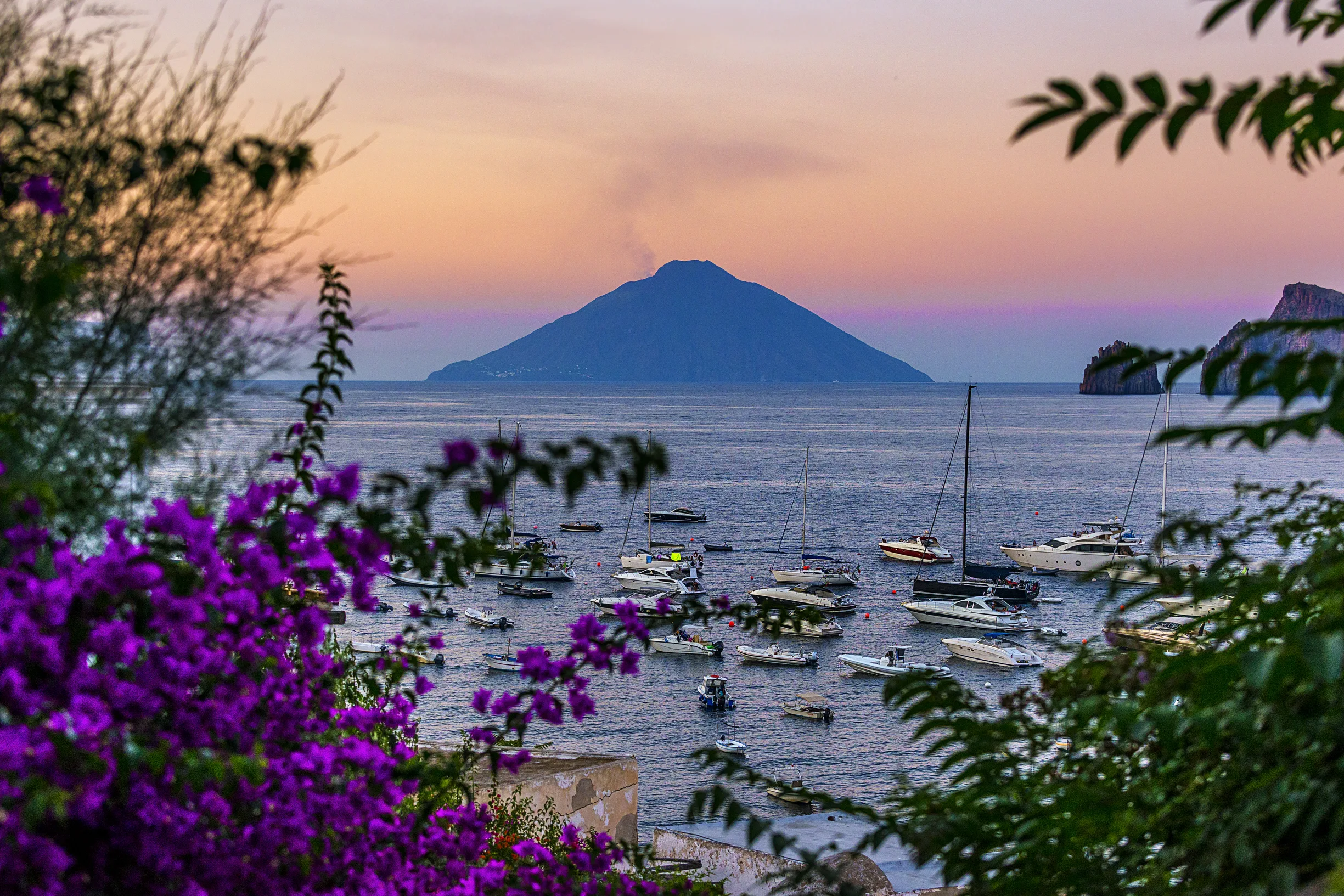
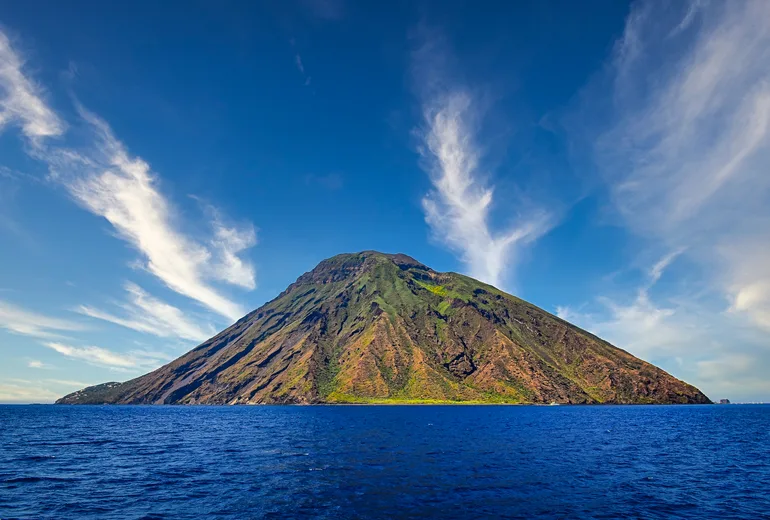
Salina is the “green island” with Malvasia vineyards and the famous granita stops at Pollara. Lunch at Pollara on the cliff terrace, then continue northeast to Stromboli. Anchor under Strombolicchio rock on the east side, position to see the volcanic eruption visible from anchor at night. The nightly Sciara del Fuoco lava flow is the route’s headline moment.
Morning departure south back through the Aeolians, lunch stop at Panarea (the smallest and chicest island), continue mainland to Cetraro for the overnight. Long day, plan for it.
The northbound mainland leg. Settled wind from south makes it manageable. Arrive Salerno late afternoon, dinner at the marina, last night.
The Tyrrhenian Sea between Salerno and Cetraro can build chop in unsettled wind. If forecast is poor at Day 5 departure, options:
— Delay 1 day at Salerno (Tyrrhenian patterns rarely persist 48+ hours)
— Shift route to a 7-day Amalfi-only loop (skip Aeolians, more time in Capri/Positano)
— Use Marina d’Arechi forecast services and the local skippers’ WhatsApp networks for real-time conditions.
47 ft cruising catamaran, peak July-August, 10 days:
— Boat charter (10 days): €12,000-17,000
— Provisioning: €1,800-2,800
— Fuel (longer passages): €600-900
— Marina + mooring (10 nights): €1,000-1,800
— Restaurants ashore: €1,600-2,500
— Bareboat all-in: €17,000-25,000
— With skipper: add €2,400-3,200 for the 10 days.
The Aeolians are best in late May, June, and September. Avoid July-August unless committed to crowds (Italian Ferragosto Aeolian traffic is real). Stromboli is active year-round but visibility of the night-time eruption depends on cloud cover — settled-weather nights are best.
Experienced charterers (skipper licensed and comfortable with 50+ nm open-water passages), couples and small groups, food-and-wine-driven travelers (the Aeolian malvasia and capers are iconic), photography-driven travelers (Stromboli’s eruption is unmissable), travelers with a 10-day window (the route doesn’t compress well to 7 days).
First-time charterers, families with kids under 12, groups uncomfortable with the open-water crossings, anyone needing daily marina access (the Aeolians are mostly mooring buoy or anchor).
Tight but possible — skip the Amalfi opening and go straight Naples-Salerno-Cetraro-Aeolians-back. Loses the photogenic Capri/Positano/Amalfi opening. Most charterers opt to keep the 10-day length.
Yes from anchor. The Sciara del Fuoco is the seaward face; the lava flows into the water but anchorages are positioned at a safe distance. Coast Guard advisories monitor activity. Local skippers know which nights are best.
Possible with operator agreement; uncommon. Most operators run Naples-to-Naples or Salerno-to-Salerno. One-way to Sicily adds the return delivery cost.
Anchoring is restricted at most Aeolian destinations due to Posidonia seagrass and volcanic-bottom irregularity. Mooring buoys are standard practice. Book by VHF on the day at popular stops.
Commercial charter fuel is duty-free at major bunkers (Lipari, Milazzo, Cetraro). Keep the charter contract on board for the operator’s paperwork.
Compare with the Amalfi Coast 7-day route or the Italy 2026 country guide.