What Size Catamaran for Italy? Berth Fees by Length and the 40-42ft Sweet Spot
How Italian berth fees scale with length and beam, and why a 40-42ft catamaran is the sweet spot for most charter crews.
Read more
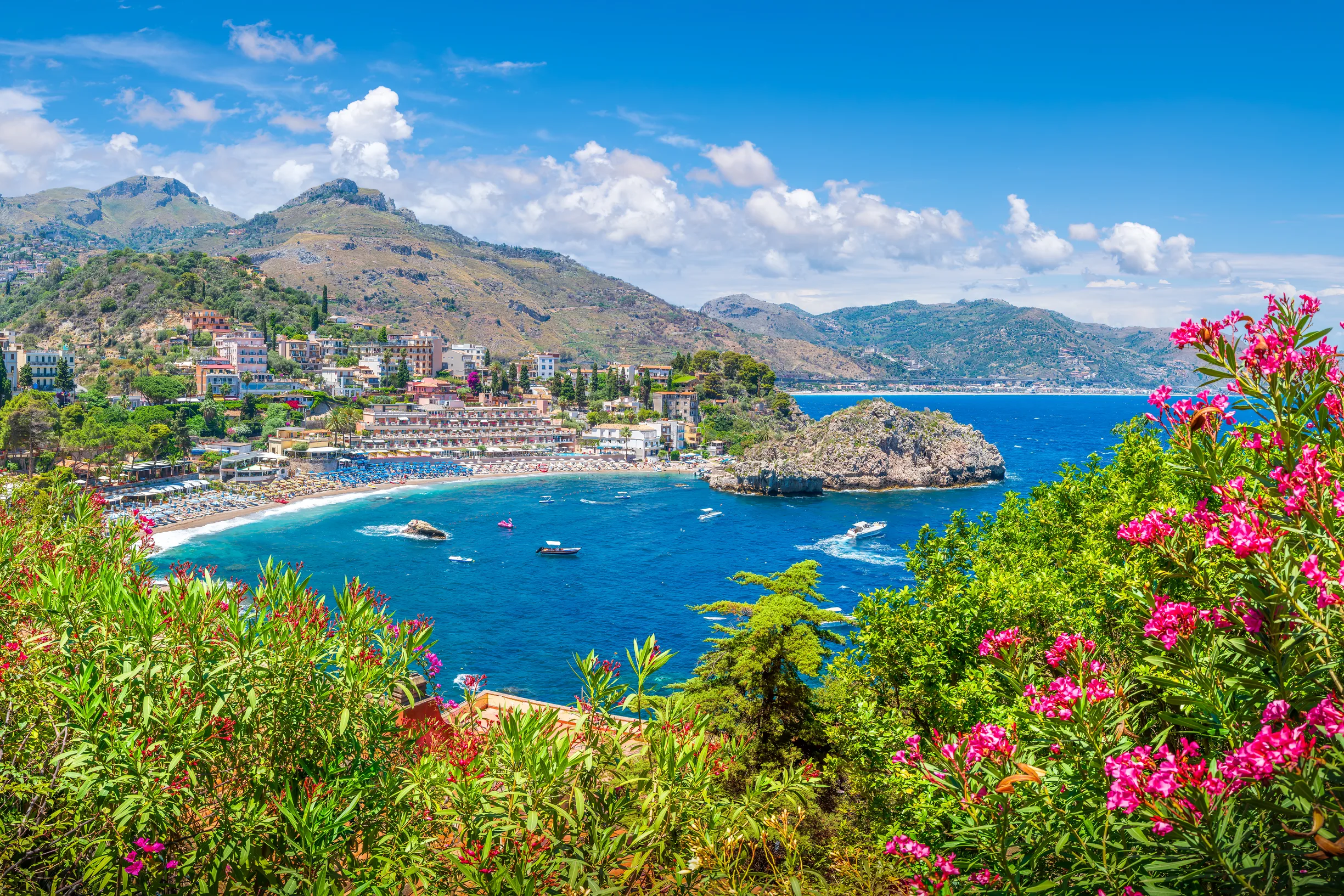
Charter media obsesses over western Sicily and the Aeolian Islands, and quietly ignores the eastern seaboard. That is a gift to anyone planning an east Sicily sailing itinerary, because the coast from Riposto down to Syracuse is one of the most dramatic short cruises in Italy: Taormina’s bay, the basalt stacks of Aci Trezza, the baroque island of Ortigia, all of it sailed with Mount Etna smoking on the horizon.
It is a compact, point-to-point run of roughly 55 nautical miles, easily done in a week with time for long lunches and a volcano day. The catch is that it is more about towns, history and the mountain than about empty coves, so it suits crews who like to step ashore. Here is a workable seven-day plan, the base logistics for Riposto and Catania, and the honest weather notes for this stretch.
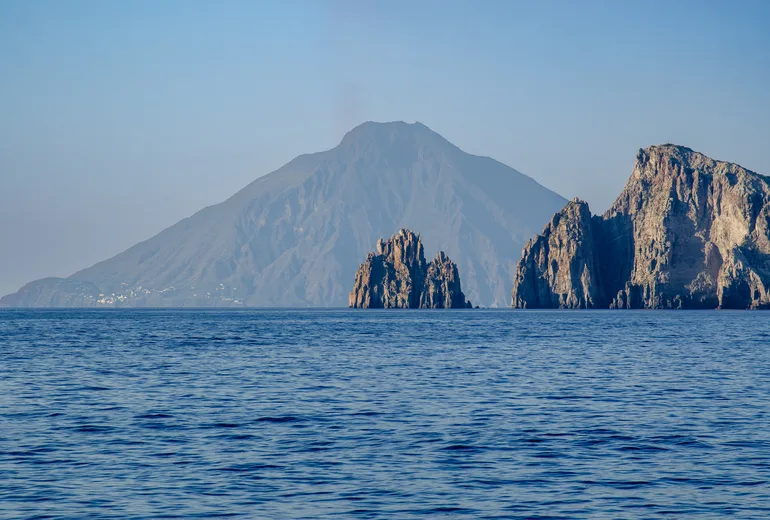
The natural northern base is Riposto, whose Marina dell’Etna sits almost directly below the volcano, an extraordinary place to step aboard. It is a full-service marina with fuel, water and provisioning nearby, and Catania’s airport is around 45 minutes away by road. Catania itself has marina options too and works as an alternative start or end point, which makes a one-way charter, north to south, very doable; ask the operator about a drop-off fee at Syracuse if you would rather not double back.
Provision in Riposto or Catania before you sail. Both have full supermarkets and the famous Catania fish market, La Pescheria, is worth a detour for the trip’s first proper meal. Once you are working down the coast the towns are well supplied, but mainland prices and choice beat the smaller harbours, so a solid first stock-up pays off. For the wider regional context and costs, our guide to how much a catamaran costs in Sicily sets expectations on charter and berth pricing here.
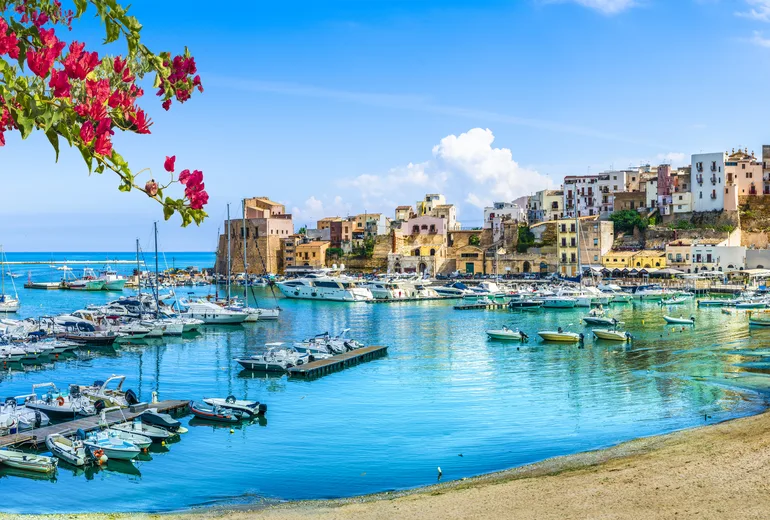
The plan runs Riposto to Syracuse and back, or one-way if your operator allows it. Distances are short, so the days are gentle and built around what is ashore.
Collect the boat, provision, and make the short 8 NM hop north to the bay below Taormina. Anchor off Isola Bella, the tiny pebble-spit island in the cove below the town, and tender ashore, or take the cable car up to Taormina itself for the Greek theatre with Etna framed behind the stage. The anchorage is fair-weather only and can roll, so read the forecast; in settled conditions it is one of the great first nights of any Italian charter.
Sail roughly 18 NM south to Aci Trezza, the fishing village famous for the Faraglioni dei Ciclopi, the jagged basalt stacks that legend says the blinded Cyclops Polyphemus hurled at the fleeing Odysseus. The columns of black volcanic rock rising straight from clear water are unlike anything else on the Italian coast, a reminder that you are sailing along the flank of an active volcano. Anchor off the stacks in settled weather for a swim around the islets, where the snorkelling over dark rock and bright fish is excellent.
Aci Trezza and neighbouring Aci Castello, with its Norman castle perched on a black lava bluff, both have small harbours and a string of seafront restaurants. Go ashore for swordfish and for pasta alla Norma, the aubergine, tomato and salted-ricotta dish born in nearby Catania and named, the story goes, after the Bellini opera. A bareboat crew should note the anchorage here is open and best left in any onshore wind; if it is blowing, push on the short distance to Catania for the night.
Short hop to Catania, med-moor or take a marina berth, and use the day for Etna. Guided trips run up to the craters and the lava fields; even a half-day on the lower slopes is memorable, and you return to a boat sitting in the shadow of the mountain you just climbed. Catania’s baroque centre and its market reward an evening ashore. This is the trip’s land-heavy day by design.
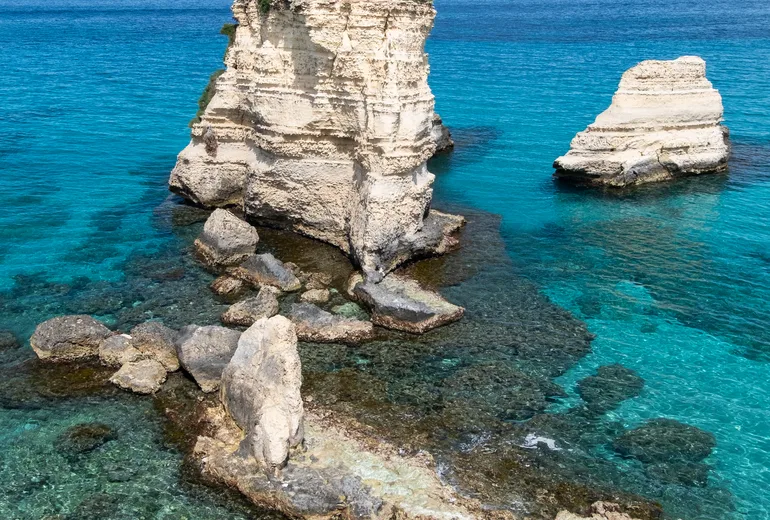
Heading south, break the run at Brucoli, a small inlet with a snug, sheltered anchorage up a narrow creek, a complete change of pace from the busy towns. The larger commercial port of Augusta sits nearby if you need shelter from a southerly. Either way this is a quieter, restorative day before the finale at Syracuse.
The highlight, and worth the build-up. From Brucoli it is around 12 NM down to Syracuse; sail into the broad Porto Grande and med-moor along the waterfront of Ortigia, the old town on its own little island linked to the mainland by a couple of bridges. Few anchorages in Italy put you closer to a living baroque city. Step off the boat into Piazza del Duomo, all honey-coloured stone, visit the freshwater Fonte Aretusa with its papyrus growing at the sea’s edge, and walk the morning market on Via Emanuele De Benedictis for capers, almonds, tomatoes and the day’s catch.
The cathedral is the trip’s quiet marvel: a working church built directly inside the columns of a 5th-century-BC Greek temple to Athena, the fluted Doric pillars still visible in the walls. Eat well here, Syracuse is among Sicily’s best food towns. Look for pasta with sea urchin in season, a plate of pesce spada alla ghiotta, and the almond granita that locals take with a warm brioche. Stay the night with the floodlit stone all around you; it is the kind of mooring you remember for years.
Spend the morning at the Plemmirio marine reserve just south of Syracuse, clear water over rock and seagrass, good snorkelling, then begin the run back north, or continue to your one-way handover. If you are returning to Riposto, re-anchor at a cove you skipped, perhaps a second night near Aci Trezza or Taormina.
Final passage to Riposto or Catania, fuel up, and a last lunch at anchor with Etna ahead of you. Build slack into the return so a contrary wind does not turn the last day into a slog.
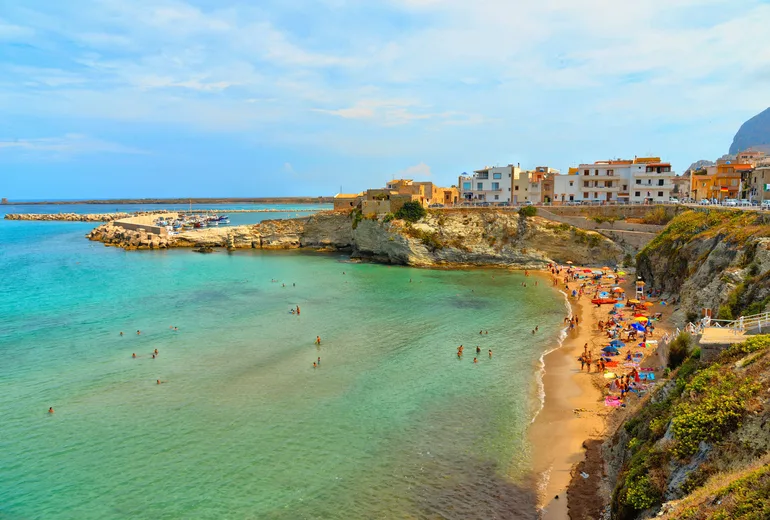
Eastern Sicily is a coast of harbours more than of bombproof natural anchorages, and planning around that fact makes the week run smoothly. The reliable all-weather berths are at Riposto’s Marina dell’Etna, the Catania marinas and the Syracuse waterfront, with Augusta as a commercial bolthole if a hard southerly sets in. Between them, the swimming stops, the bay below Taormina, off Isola Bella, the water around the Aci Trezza stacks, the Plemmirio reserve, are largely fair-weather anchorages that become untenable when the wind turns onshore.
The practical upshot is to treat your overnight ports as fixed points and your daytime anchorages as weather-dependent treats. Brucoli is the one genuinely sheltered natural spot on the route, a narrow creek you can tuck up for a calm night, so it earns its place in the plan. Med-mooring is the norm in the town harbours, stern-to with your own anchor or a lazy line, so a crew comfortable with that manoeuvre will have an easier week than one used only to dropping the hook in open bays.
The food alone justifies the route. This is the home of pasta alla Norma and of the granita-and-brioche breakfast, and the Ionian catch is superb: swordfish, tuna, sea urchin and the small fry fried whole. Catania’s La Pescheria fish market is a spectacle worth timing your arrival around, and Ortigia’s market is its quieter, equally good southern cousin. Carry a cool bag ashore and you can provision a memorable lunch at anchor straight from either.
The Ionian coast of Sicily is generally more sheltered than the open Tyrrhenian, but it has its moods. Summer typically brings light to moderate breezes and afternoon sea breezes good for sailing, while the scirocco, the hot southeasterly off Africa, can build an uncomfortable sea against this coast and bring haze and heat. Several of the best anchorages, Taormina’s bay especially, are fair-weather only and roll when the wind goes onshore, so flexibility matters. For the seasonal detail, our notes on sailing weather conditions in Sicily are worth a read before you commit dates.
The honest catch with eastern Sicily is that it is a coast of towns, not a coast of wilderness. If you came for deserted coves and long anchored nights, the Aeolians or western Sicily suit you better. What this route does brilliantly is combine serious history, superb food and a live volcano into a relaxed week of short sails. Late October, when this article is timed, sits right at the season’s edge: lovely light, thin crowds, warm-enough water, with the trade-off of watching for the first autumn lows. If you want to extend the trip toward the north coast, it links naturally to our 7-day itinerary from Capo d’Orlando.
Yes, if you enjoy towns, history and food more than empty coves. The Riposto-to-Syracuse coast packs Taormina, the Aci Trezza stacks, Catania and baroque Ortigia into about 55 nautical miles, all under Mount Etna, with short, gentle sailing days. It is one of Italy’s best short cruises for crews who like to go ashore.
Riposto’s Marina dell’Etna, directly below the volcano and 45 minutes from Catania airport, is the natural northern base. Catania has marina options too and works as an alternative, making a one-way north-to-south charter possible. Ask your operator about a drop-off fee at Syracuse.
For much of the route, yes. The volcano dominates the skyline from Taormina down to Catania, and on clear days you sail with its smoking cone constantly in view. A guided trip up the craters from Catania is the natural land day of the trip.
The Ionian side is generally more sheltered than the open Tyrrhenian, with light to moderate summer breezes and helpful afternoon sea breezes. The main thing to watch is the scirocco, the hot southeasterly, which can build a sea against the coast. Several anchorages are fair-weather only, so stay flexible.
Very much so. Mooring along the Ortigia waterfront in Syracuse puts you steps from one of Sicily’s finest old towns, with its baroque squares, the cathedral built inside a Greek temple, and excellent restaurants. Spending the night there, with the floodlit stone around you, is the route’s standout.
Tempted by the volcano coast? See available boats and dates on our Italy catamaran charter destinations page and start planning your eastern Sicily route.