
1 Jun 2024
25 minute read
How do I plan a sailing route in Italy?
25 minute read
Updated May 2026.
Italy is the most stylistically varied charter coast in the western Mediterranean. Inside one country you can charter a catamaran along the cliffs of Amalfi, the granite coves of La Maddalena, the active volcanoes of the Aeolian Islands, the pebble beaches of the Riviera, or the working harbours of Puglia. The catch is choosing one and committing — try to see Italy on a single charter and you spend the week motoring between airports. This guide is the practical 2026 catamaran-charter Italy operating manual, focused on the three highest-value cruising grounds: Sardinia, Sicily, and the Amalfi Coast.
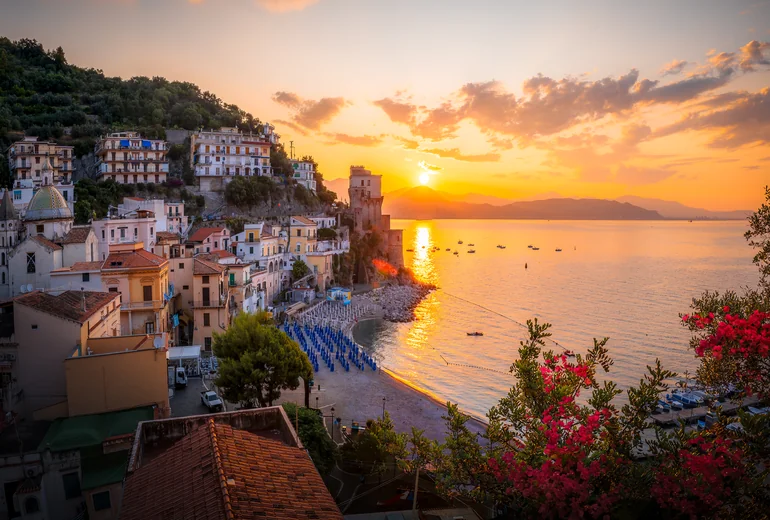
Amalfi Coast and the Bay of Naples. The most-photographed and most-regulated. Day-tripper boats own the bay 10:00-17:00; mooring buoys mandatory in many bays. Catamaran rates carry 30-60% premium over monohull at the same length, partly because the buoy system favours monohulls. Beautiful, but planning-intensive. Most popular sailing destinations in Italy covers the regional comparison.
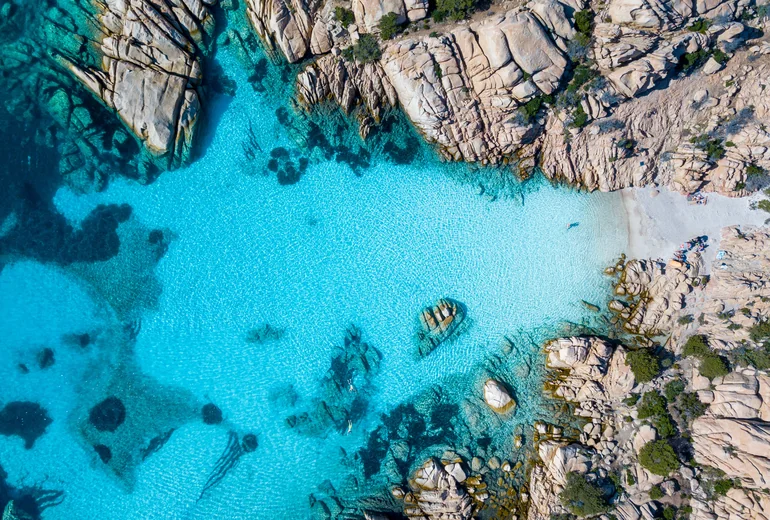
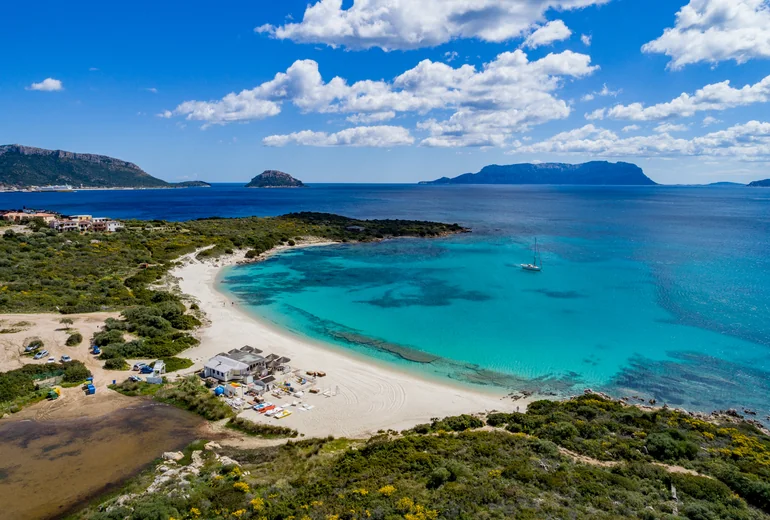
Sardinia, Costa Smeralda and La Maddalena. Crystal water, granite islets, very high prices, very high boat density in August. Catamaran-friendly: the Maddalena buoy system handles cats fine, and the sandy anchorages on the south coast favour shallow draft. Sardinia is the marquee Italian catamaran destination.
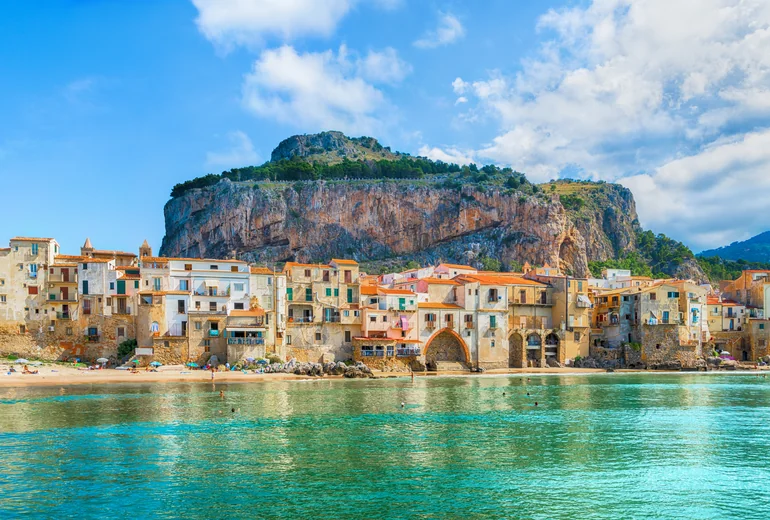
Sicily and the Aeolian Islands. Volcanic, dramatic, less polished than Sardinia. The Aeolian crossing from Sicily’s north coast is a real weather call — 30-40 NM open water. Catamaran fleet is smaller than Sardinia’s. Best for second or third Italian charterers.
Italian Riviera (Liguria). Genoa, Portofino, Cinque Terre. Short hops between fishing villages, mountain backdrop, tight marinas. A different feel from the south — closer to coastal France than the Mediterranean stereotype. Catamaran fleet is mid-sized.
Apulia and the heel of Italy. Brindisi to Otranto, with the Tremiti Islands further north. Quietly emerging as a charter area in the past five years. Affordable, untouristy, well placed for crossings to Greece. Limited catamaran fleet.
May-June: a clean, cool window. The Amalfi day-tripper boats haven’t started running at full intensity. Catamaran prices 15-25% under peak. Water reaches 20 °C by mid-June.
July-August: peak Italian holiday. Sardinian marinas full from June 25, Amalfi bays at capacity, the heat is real. Catamaran rates peak. Book everything 4 months ahead.
September: the locals’ month. Italians return to work, water at peak summer temperature (24 °C), prices drop. The single best month if you can pick.
October: shoulder. Cold mornings, perfect afternoons. Half the marinas in the Aeolian Islands close after October 15.
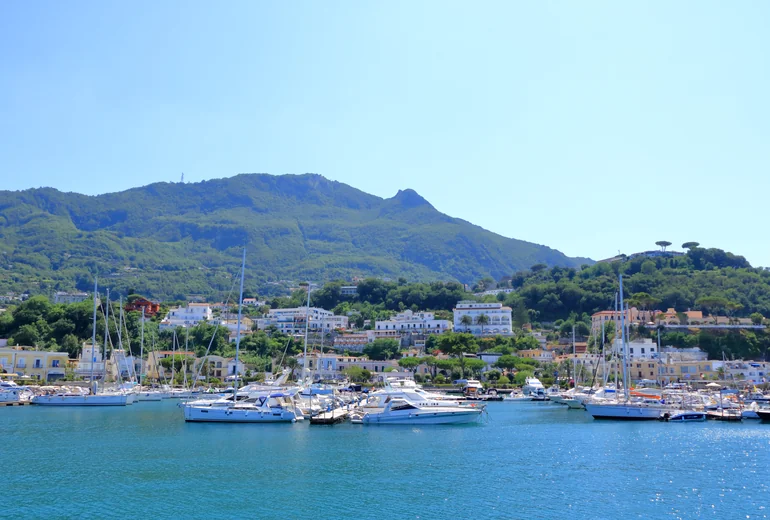
Olbia and Portisco: Sardinian bases. Olbia airport sits 15 minutes from Marina di Olbia. Portisco is the smaller premium base — newer fleet, fewer charter weeks per boat, higher prices. Sardinian Costa Smeralda’s premium marinas (Porto Cervo, Cala di Volpe) are best as day-stops, not bases. The Sailing around Olbia 7-day itinerary walks the standard La Maddalena route.
Salerno and Castellammare di Stabia: Amalfi bases. Salerno is the more practical: bigger marina, easier to provision, less Naples traffic. From Salerno you reach Capri in 4 hours under sail, Amalfi in 2.
Palermo and Milazzo: Sicilian bases. Milazzo is closer to the Aeolian crossing.
La Spezia and Genoa: Riviera bases. La Spezia is more compact and easier to handle for a charter pickup.
The standard Sardinian catamaran week:
Day 1: Olbia → Cala di Volpe (12 NM). Cast off, sail north along the Smeralda coast, anchor or moor at Cala di Volpe. Anchorage outside the premium marina is free.
Day 2: Cala di Volpe → Spargi, La Maddalena (15 NM). Enter the park. Spargi has the calmest, most-photogenic anchorage in the archipelago — Cala Soraya — buoy-only.
Day 3: Spargi → Budelli → Caprera (15 NM). Spiaggia Rosa on Budelli (the Pink Beach, no longer accessible to swim, but visible from the boat). Continue to Cala Coticcio on Caprera for the night.
Day 4: Caprera → Bonifacio, Corsica (8 NM crossing). Day trip across the strait. Marina overnight back in Sardinia.
Day 5-6: La Maddalena bays second visit, with longer time at Cala Coticcio and Cala dei Ponzesi. Buoys booked through the park system.
Day 7: Caprera → Olbia (22 NM). Direct return south through the Bouches de Bonifacio.
Total: ~85 NM. The shortest distance week of any standard Italian catamaran charter — tight cruising, every anchorage protected. Cat-friendly throughout.
The Aeolian Islands week from Milazzo is the wilder alternative. Lipari, Salina, Stromboli (the active volcano), Vulcano, Filicudi, Panarea. Distances are longer (20-40 NM legs), the volcanism is real (Stromboli erupts every 30 minutes), and the marinas are smaller. Catamaran inventory at Milazzo is limited. How do I plan a sailing route in Italy covers the route-planning logic for the alternative regions.
The Amalfi Coast is not the most catamaran-friendly Italian charter region but it’s the most scenic. Mooring buoys at Positano, Amalfi, Conca dei Marini, and Cetara are sized for monohulls; catamaran moorings often require pre-booking through the official Costa Amalfitana app. Marina overnights at Capri’s Marina Grande are the bottleneck — book months ahead for a catamaran berth, or accept that you’ll anchor in Bagni di Tiberio and tender into town.
The Cilento coast south of Salerno is the catamaran-friendly secret of an Amalfi week. Empty bays, fishing villages, no buoy regulations. Catamarans can free-anchor in 6-12 m sand bottom. Acciaroli and Palinuro are the standard overnights.
For a 7-day mid-June 2026 catamaran charter, crew of 8:
— 45-foot catamaran from Olbia: €15,000-20,000 boat (Sardinian premium) + €2,500-3,500 expenses = €17,500-23,500 total (€2,188-2,938 per person).
— 45-foot catamaran from Salerno: €13,000-18,000 boat + €2,200-3,000 expenses = €15,200-21,000 total (€1,900-2,625 per person).
— 45-foot catamaran from Palermo: €12,000-16,000 boat + €2,000-2,800 expenses = €14,000-18,800 total (€1,750-2,350 per person).
Add a hostess at €1,300-1,500 (essential on Amalfi to handle restaurant logistics). Add a skipper at €1,750-2,000 if no one onboard is licensed. Catamaran security deposits run €5,000-8,000. What is included in the catamaran rental fee covers the standard inclusions.
Italy has the most regulated anchoring rules of any Mediterranean charter coast. Amalfi Coast: paid mooring buoys mandatory in many bays, booked online before arrival. La Maddalena Archipelago: permit-buoy system, opens 30 days ahead, popular bays sell out within minutes. Aeolian Marine Reserve: lighter regulation than Amalfi. Costa Smeralda’s premium marinas: berth bookings are non-negotiable in season. Sailing conditions in Italy covers the operational realities.
The Italian catamaran charter fleet centres on three tiers: 40-42 ft (sleeps 6-8), 45-47 ft (sleeps 8-10, the most-chartered), 50-55 ft (sleeps 10-12). Modern Lagoon, Bali, Fountaine Pajot models dominate. The Costa Smeralda’s premium marinas slightly favour smaller cats due to berth-width constraints; Sardinian charters book the 40-45 ft tier most frequently. Amalfi mooring buoys also favour smaller widths. How do I choose the right catamaran for my trip covers the layout choice.
Italy accepts the ICC, RYA Day Skipper, US Sailing Bareboat, and equivalent qualifications for the registered skipper. Catamaran charter insurance is included in the boat rate; security deposits cover damage above the policy excess. What qualifications should I look for in a rental company covers operator vetting.
Yes, modestly. Italy 2026 rates run 10-15% over Croatian equivalents and 15-20% over Greek equivalents at the same boat length. The Sardinian Costa Smeralda specifically is the most expensive western Mediterranean catamaran charter ground.
Sardinia. La Maddalena’s tight, sheltered cruising and dense infrastructure are gentler than the Aeolian Islands’ open-water crossings. Sicily is the second-charter pick.
Yes — Bonifacio crossing is 7 NM. Most operators allow a one-day Corsican detour. The Strait of Bonifacio is one of the windiest stretches of the western Mediterranean; check the Météo France forecast specifically for the strait.
Tight. Premium 45-foot catamarans for peak weeks at Olbia and Salerno book by November 2025. Standard 42-45 ft cats book by February 2026. Last-minute deals don’t really exist for Italian peak weeks.
Some operators offer it as a 10-14 day charter with a 30-50% upcharge. The Sardinia-Sicily transfer is roughly 200 NM open-water — typically 3 sailing days with at least one overnight at sea. Best done in stable June or September weather windows.
Italian charter operators run a more formal handover than Greek or Croatian equivalents. Expect a 60-90 minute briefing covering boat systems, local hazards, mooring rules, and emergency procedures. The handover team often goes through the inventory item-by-item; the catamaran’s larger inventory (paddleboards, snorkel kits, kid-sized life jackets, BBQ kit, deck cushions) takes longer than monohull equivalents. Italian charter agreements are typically detailed — read the damage policy and APA terms (on crewed yachts) before signing. Tipping the handover team isn’t customary; tipping a hired skipper or hostess is (10-15% of week-rate, in cash).
Italian catamaran charter weeks split roughly 40% dinners aboard, 60% dinners ashore — Italian restaurant culture is part of the charter experience. Provision the substantial week at base-port supermarkets (Conad, Esselunga, Pam, Eurospin, Lidl). Mid-week top-ups at smaller island stores. Budget €130-170 per crew member for groceries plus €40-70 per dinner ashore. Italy’s APA system (Advance Provisioning Allowance) on crewed yachts adds a layer; on bareboat charters you pay each cost as it occurs. Italian wine and olive oil are noticeably better when bought from village shops than from chain supermarkets — plan to top up with regional specialities mid-week.


